


Software Testing Basics: A Complete Beginner’s Guide

Software Testing Basics A Complete Beginner Guide
Software testing basics form the foundation of building reliable, secure, and high quality software. In today’s digital world, almost every business depends on software applications. From mobile apps and websites to banking systems and healthcare platforms, software plays a critical role. If software fails, it can lead to financial loss, security risks, and poor user experience. This is why understanding the basics of software testing is essential for developers, testers, students, and even project managers.
This guide explains software testing basics in simple language so beginners can easily understand testing fundamentals and their importance in software development.
What Is Software Testing
Software testing is the process of evaluating a software application to identify errors, bugs, or missing requirements. The main goal of testing is to ensure that the software works as expected and meets user requirements before it is released to end users.
In simple words, software testing checks whether a product is doing what it is supposed to do.
Testing helps answer questions such as:
- Does the software work correctly
- Is it safe to use
- Is it fast and reliable
- Does it meet business and user needs
Why Software Testing Is Important
Software testing is a critical phase in software development because no software is perfect without testing. Even a small bug can cause serious issues if it reaches production.
Key reasons why software testing is important include:
- First, it improves software quality by detecting bugs early in the development cycle. Early detection saves time and cost.
- Second, it ensures user satisfaction. A tested application provides a smooth and error free experience.
- Third, it enhances security. Testing helps identify vulnerabilities that could be exploited by hackers.
- Fourth, it reduces development costs. Fixing bugs after release is much more expensive than fixing them during testing.
- Finally, it builds trust. Reliable software increases customer confidence and brand reputation.
Software Testing in Software Development
Software testing is an integral part of the Software Development Life Cycle. It is not a separate activity performed only at the end. Instead, testing starts from the requirement analysis stage and continues throughout development and maintenance.
In modern development practices such as Agile and Scrum, testers work closely with developers from the beginning. This approach helps deliver high quality software faster.
Testing in software development includes:
- Reviewing requirements
- Validating design
- Testing code functionality
- Checking system performance
- Ensuring user acceptance
Basics of Software Testing for Beginners
Understanding the basics of software testing helps beginners build a strong foundation. These basics include knowing what to test, how to test, and when to test.
At a basic level, software testing involves:
- Planning the testing process
- Designing test cases
- Executing tests
- Reporting defects
- Re testing after fixes
Beginners should focus on learning manual testing concepts before moving to automation.
Types of Software Testing
There are many types of software testing, each serving a specific purpose.
Manual Testing
Manual testing is performed by a human tester without using automation tools. Testers manually execute test cases and compare actual results with expected results.
Manual testing is ideal for:
Exploratory testing
Usability testing
Ad hoc testing
Automated Testing
Automated testing uses tools and scripts to execute test cases automatically. It saves time and is useful for repetitive testing tasks.
Automation is commonly used for:
Regression testing
Performance testing
Load testing
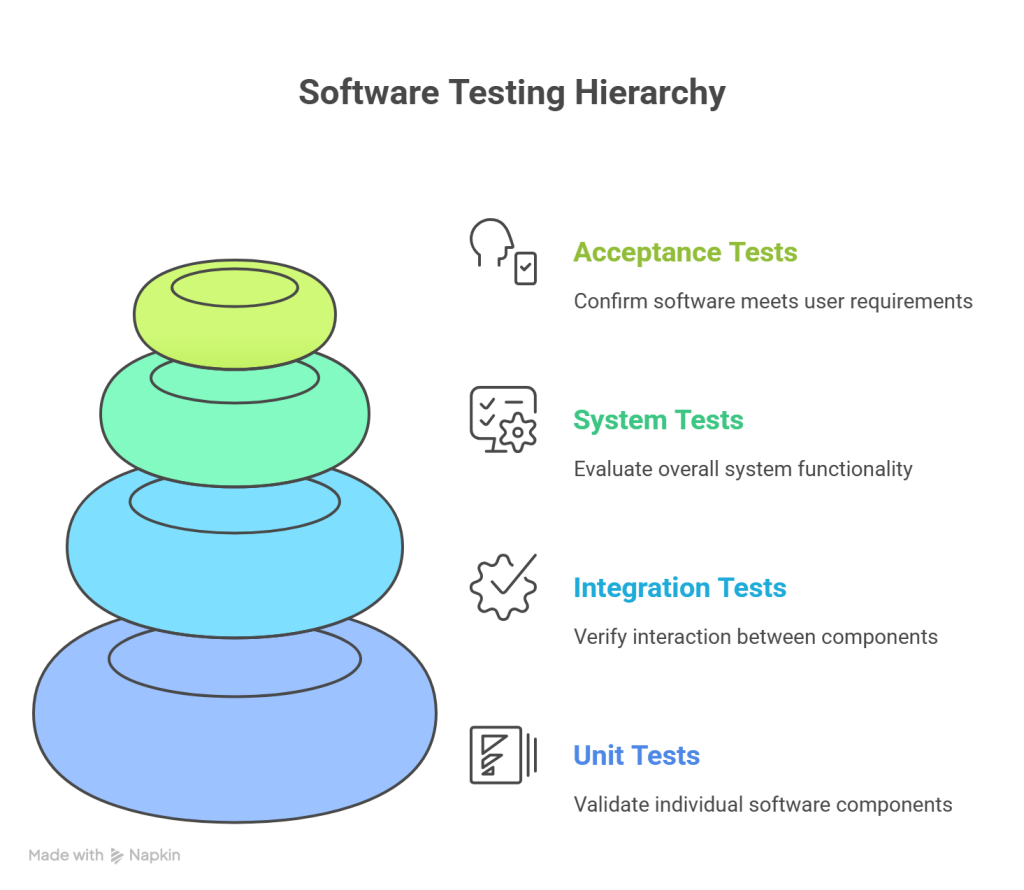
Levels of Software Testing
Software testing is performed at different levels to ensure complete coverage.
Unit Testing
Unit testing focuses on individual components or functions of the software. It is usually performed by developers.
Integration Testing
Integration testing checks how different modules work together. It ensures that integrated components communicate correctly.
System Testing
System testing validates the complete system as a whole. It checks whether the application meets specified requirements.
Acceptance Testing
Acceptance testing ensures the software is ready for release. It is often performed by clients or end users.
Testing Fundamentals in Software Testing
Testing fundamentals are the core principles that guide effective testing.
One important principle is that testing shows the presence of defects, not their absence. This means testing can find bugs but cannot guarantee that software is completely bug free.
Another fundamental is that exhaustive testing is impossible. Testing every possible scenario is not feasible, so testers prioritize critical areas.
Early testing is another key principle. Testing should start as early as possible to reduce defects.
Defect clustering states that most bugs are found in a small number of modules.
Finally, testing is context dependent. Different applications require different testing approaches.
Test Basics Every Beginner Should Know
Test basics include understanding test cases, test scenarios, and defect reporting.
A test case is a set of steps executed to verify a specific functionality.
A test scenario is a high level description of what needs to be tested.
A defect is a deviation between expected and actual results. Defects are logged with details such as severity, priority, and steps to reproduce.
Learning these basics helps beginners perform testing effectively.
Role of Testers in Agile and Scrum
In Agile and Scrum environments, testers play an active role throughout development.
Testers collaborate with developers and product owners.
They participate in sprint planning and daily meetings.
They perform continuous testing during each sprint.
They ensure quick feedback and faster releases.
This collaboration improves product quality and reduces last minute issues.
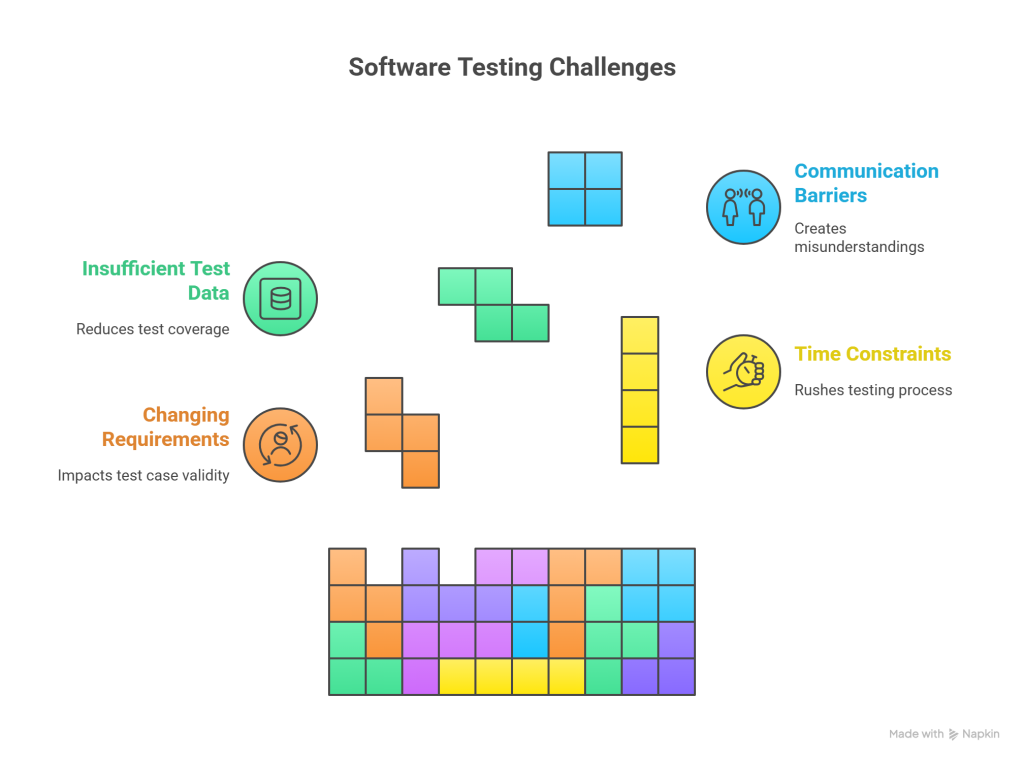
Common Challenges in Software Testing
Software testing comes with challenges such as:
Changing requirements
Limited time for testing
Lack of test data
Communication gaps between teams
However, proper planning, clear communication, and use of testing tools can overcome these challenges.
Career Scope in Software Testing
Software testing offers excellent career opportunities. Beginners can start as manual testers and grow into automation testers, performance testers, or test managers.
With the rise of Agile, DevOps, and AI driven testing, the demand for skilled testers is increasing worldwide.
Conclusion
Software testing basics are essential for building reliable and high quality software. Understanding testing fundamentals helps beginners gain confidence and perform effective testing. Software testing is not just about finding bugs but about improving overall product quality and user satisfaction.
By learning the basics of software testing, you open doors to a rewarding career in the software industry and contribute to building better digital solutions.