

How Does Geothermal Energy Work?

Understanding Earth’s Hidden Source of Power
Imagine a world where we can power cities, heat homes, and even generate electricity using the natural heat beneath our feet. That’s exactly what geothermal energy allows us to do. For centuries, humans have enjoyed hot springs and steam vents, but only in recent decades have we learned to harness this underground heat on a massive scale.
Today, geothermal energy provides clean, renewable, and consistent power in many parts of the world. Countries like Iceland, the United States, and the Philippines are leading examples of how geothermal energy can be used for both electricity generation and direct heating systems.
But before we explore the technology, let’s first understand what geothermal energy is and how it actually works.
What Is Geothermal Energy?
To begin with a simple definition, geothermal energy is the heat that comes from within the Earth. The word “geothermal” comes from two Greek words, geo meaning “earth” and therme meaning “heat.” This natural heat originates from two main sources: the decay of radioactive materials in the Earth’s core and the leftover energy from our planet’s formation billions of years ago.
The definition of geothermal energy can be described as the process of capturing this underground heat and using it for practical purposes, such as generating electricity, heating buildings, or supporting agricultural systems.
Think of the Earth as a giant natural battery. Beneath the crust, molten rock called magma keeps temperatures extremely high, and this heat slowly radiates upward. In some areas where heat and water meet underground, it forms reservoirs of hot water or steam. These are the places where geothermal energy is most accessible.
How Does Geothermal Energy Work?
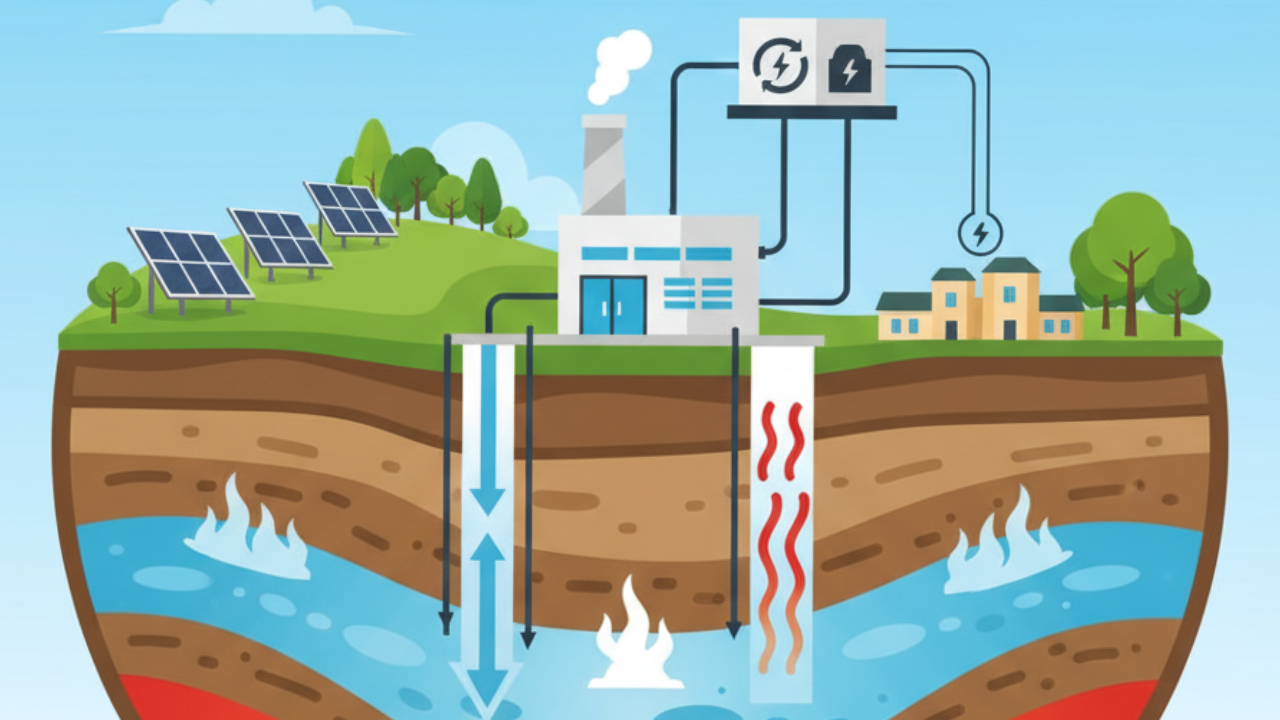
The way geothermal energy works is both fascinating and efficient. Beneath the surface, there are layers of rock and water that store natural heat. By drilling wells deep into the ground, engineers can tap into these underground heat reservoirs. The steam or hot water that rises to the surface is used to power turbines, which then generate electricity.
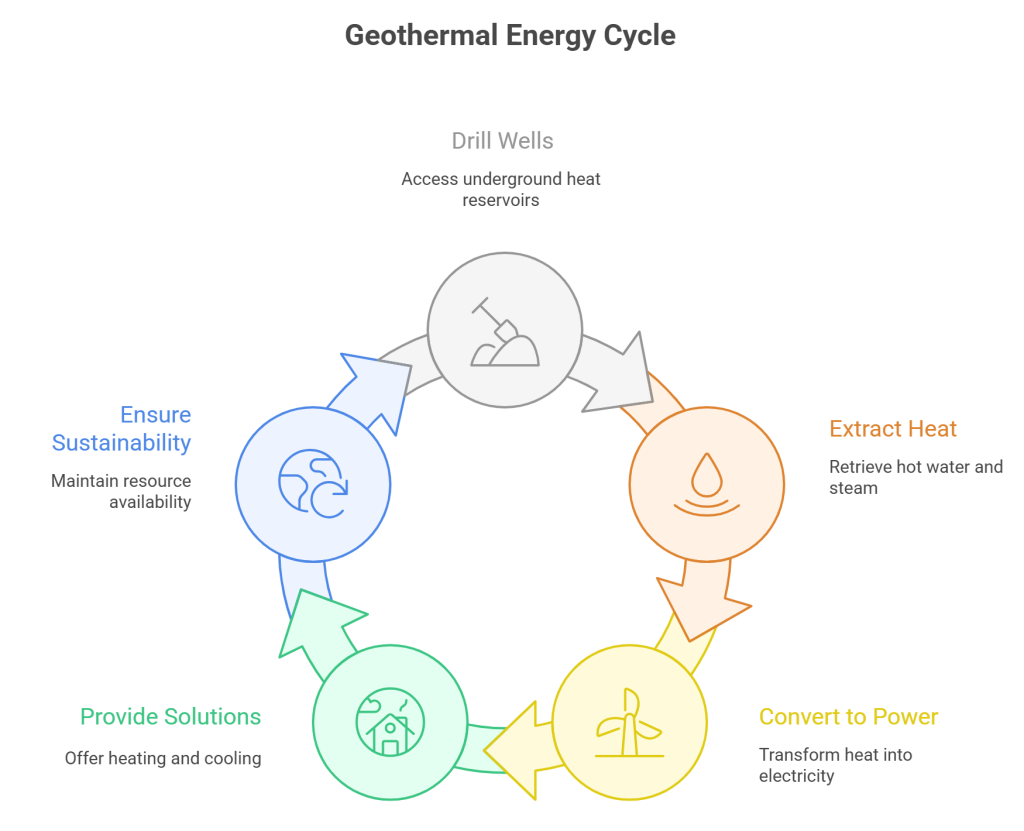
Here’s a simple explanation of how geothermal energy works:
- Drilling Wells: Wells are drilled deep into geothermal reservoirs to access underground steam or hot water.
- Steam Production: The steam rises naturally or is pumped to the surface.
- Turbine Activation: The steam turns turbines connected to generators.
- Electricity Generation: The turbine converts mechanical energy into electrical energy.
- Water Reinjection: The cooled water is injected back underground to maintain sustainability.
This process continues indefinitely, making geothermal energy one of the most reliable renewable energy sources available today.
Types of Geothermal Energy Systems
Geothermal energy is used in different ways depending on the resource and location. There are three main types of geothermal systems that serve various needs, from large-scale electricity generation to heating homes.
Geothermal Power Plants
Geothermal power plants are facilities that convert underground heat into electricity. Depending on the temperature and depth of the geothermal source, three types of plants are used:
- Dry Steam Plants: Use steam from underground to spin turbines directly.
- Flash Steam Plants: Take high-pressure hot water, lower the pressure, and use the resulting steam to drive turbines.
- Binary Cycle Plants: Use moderate-temperature water to heat another fluid that vaporizes and drives a turbine.
These plants can operate continuously, providing a steady source of electricity regardless of weather conditions.
Direct Use and District Heating Systems
Not all geothermal energy is used to generate electricity. In some regions, heat from underground is used directly to warm buildings, greenhouses, and even swimming pools. This method, called direct use, takes advantage of naturally occurring hot water that’s not hot enough for power generation but perfect for heating.
For example, in Reykjavik, Iceland, nearly 90 percent of homes are heated using geothermal energy. This approach is efficient, sustainable, and affordable, reducing dependence on fossil fuels and lowering carbon emissions.
Geothermal Heat Pumps
Geothermal heat pumps use the steady temperature beneath the ground to heat and cool buildings. The temperature about ten feet below the surface stays between 50°F and 60°F year-round.
In the winter, the system extracts heat from the ground and moves it indoors. In the summer, the process is reversed, transferring heat from the building back into the ground. This system can also provide hot water, making it an all-season energy-efficient solution.
According to the U.S. Environmental Protection Agency (EPA), geothermal heat pumps are among the most efficient and environmentally friendly heating and cooling systems available.
Advantages of Geothermal Energy
Harnessing the Earth’s heat comes with many advantages. Here are some of the most significant benefits of geothermal energy:
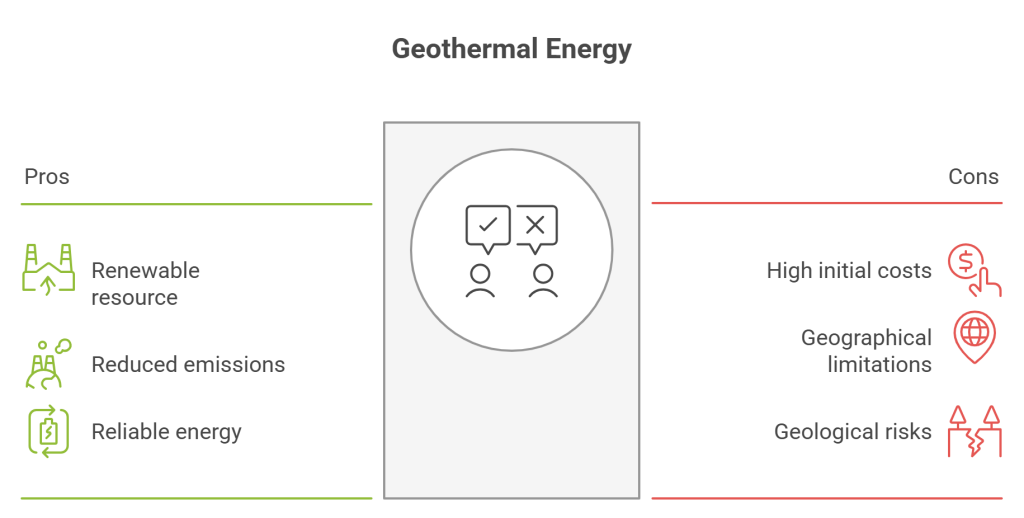
- Renewable and Sustainable: The Earth’s heat is virtually endless.
- Low Carbon Footprint: Produces minimal greenhouse gas emissions.
- Cost-Effective Over Time: Once installed, the systems have low maintenance costs and long lifespans.
- Consistent Energy Supply: Provides continuous power, day and night.
- Local Energy Production: Reduces reliance on imported fuels and enhances energy independence.
These advantages make geothermal energy one of the most promising renewable resources for the future.
Advantages of Geothermal Energy
Despite its benefits, geothermal energy also faces a few challenges.
- High Initial Costs: Drilling and setting up plants require substantial investment.
- Limited Locations: Geothermal resources are mainly found in volcanic or tectonically active regions.
- Potential Geological Risks: In some areas, drilling may cause minor tremors or land shifts.
However, technological advancements and growing investment are helping overcome these limitations, expanding geothermal potential worldwide.
The Future of Geothermal Energy
As the world searches for clean and sustainable energy sources, geothermal energy is gaining recognition for its reliability and low environmental impact. According to the U.S. Department of Energy’s GeoVision report, geothermal electricity generation could increase more than 25 times by 2050.
Innovations like Enhanced Geothermal Systems (EGS) are creating opportunities to develop geothermal resources even in regions without natural reservoirs. From powering cities to heating hospitals, geothermal energy is set to play an important role in the global energy transition.
Conclusion
So, how does geothermal energy work? It’s a remarkable process that taps into the Earth’s natural heat to create clean and renewable power.
Understanding what geothermal energy is, along with its definition, applications, and benefits, helps us realize its importance in building a sustainable future. As technology continues to evolve, the Earth’s hidden heat could become one of our most reliable sources of energy.
Geothermal energy represents more than just a scientific achievement. It symbolizes harmony between human innovation and nature’s potential, reminding us that some of the best energy solutions lie right beneath our feet.