Comments Off on Ukulele History: A Complete Guide to the Origin and Evolution of the Ukulele
The Complete Story of the Beloved “Jumping Flea”
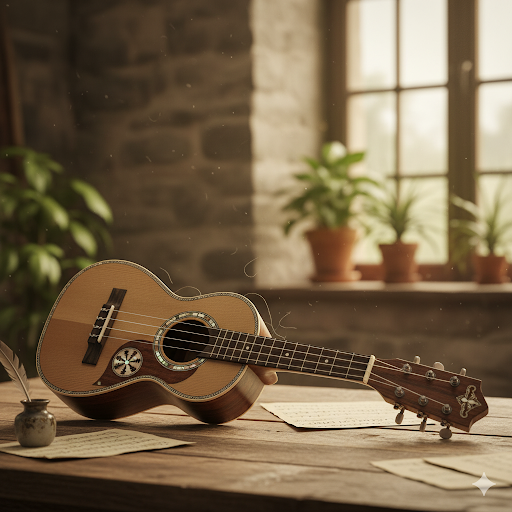
The ukulele may be small, but its story spans oceans, continents, and cultures. Many people assume this instrument was born in Hawaii, but the true ukulele history begins thousands of miles away in Portugal. What started as a Portuguese folk instrument eventually transformed into a symbol of Hawaiian identity and later a global musical icon.
In this complete guide, we’ll explore the origin of the ukulele, where the ukulele was made, what the ukulele was originally called, and the evolution of the ukulele into different types and sizes used today.
1. The Real Birthplace of the Ukulele
Madeira, Portugal — Not Hawaii
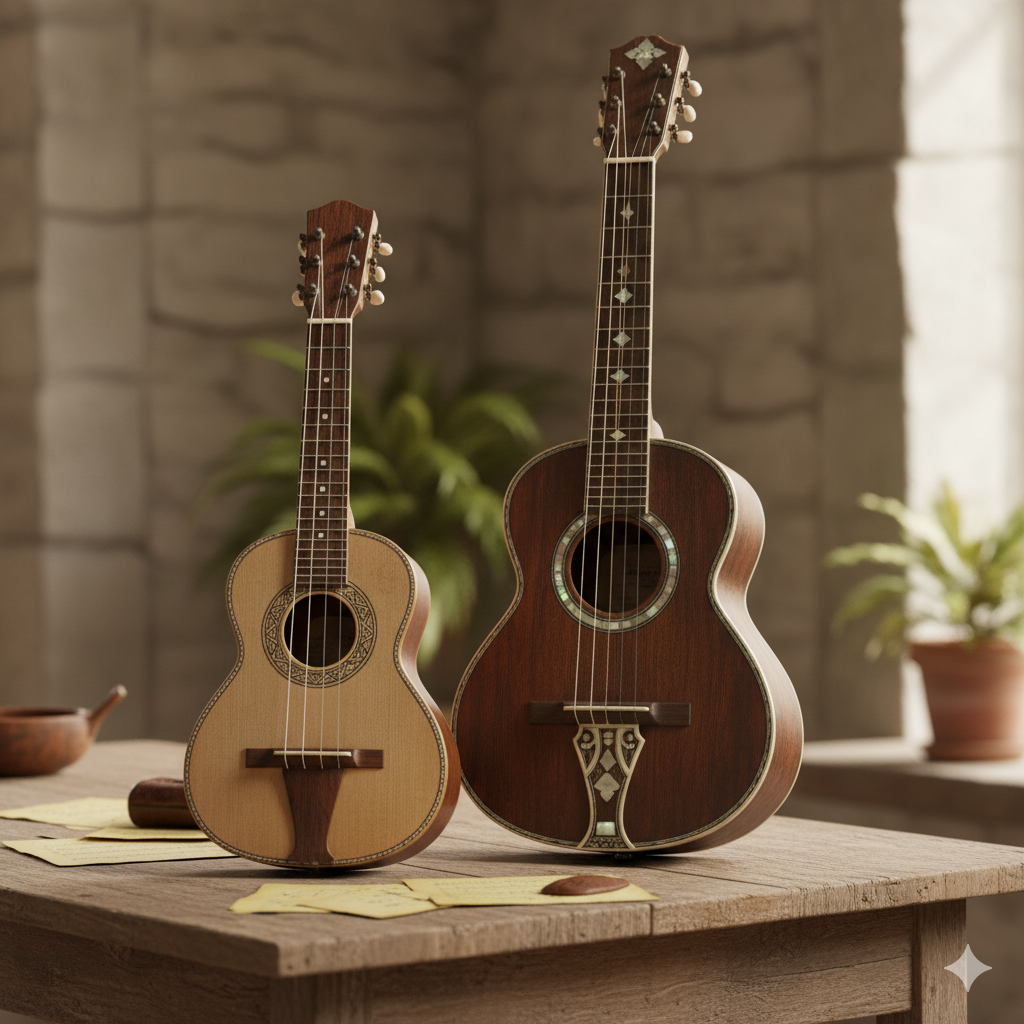
Before becoming the Hawaiian ukulele instrument, it existed in Portugal as two small string instruments:
The machête (or braguinha) The five-string rajão
These instruments formed the foundation for what would later become the ukulele. This is where the history of the ukulele truly begins.
2. The Journey Across the Ocean
Portuguese Migrants Bring Music to Hawaii
In the late 1800s, Madeiran migrants brought their machête and rajão to Hawaii. Their bright, lively music fascinated locals, marking the beginning of the ukulele’s cultural history.
Three craftsmen played major roles in the origin of the ukulele:
Manuel Nunes Augusto Dias José do Espírito Santo
They began modifying Portuguese instruments and created what Hawaiians quickly adopted as the ukulele.
3. How the Ukulele Got Its Shape, Sound & Strings
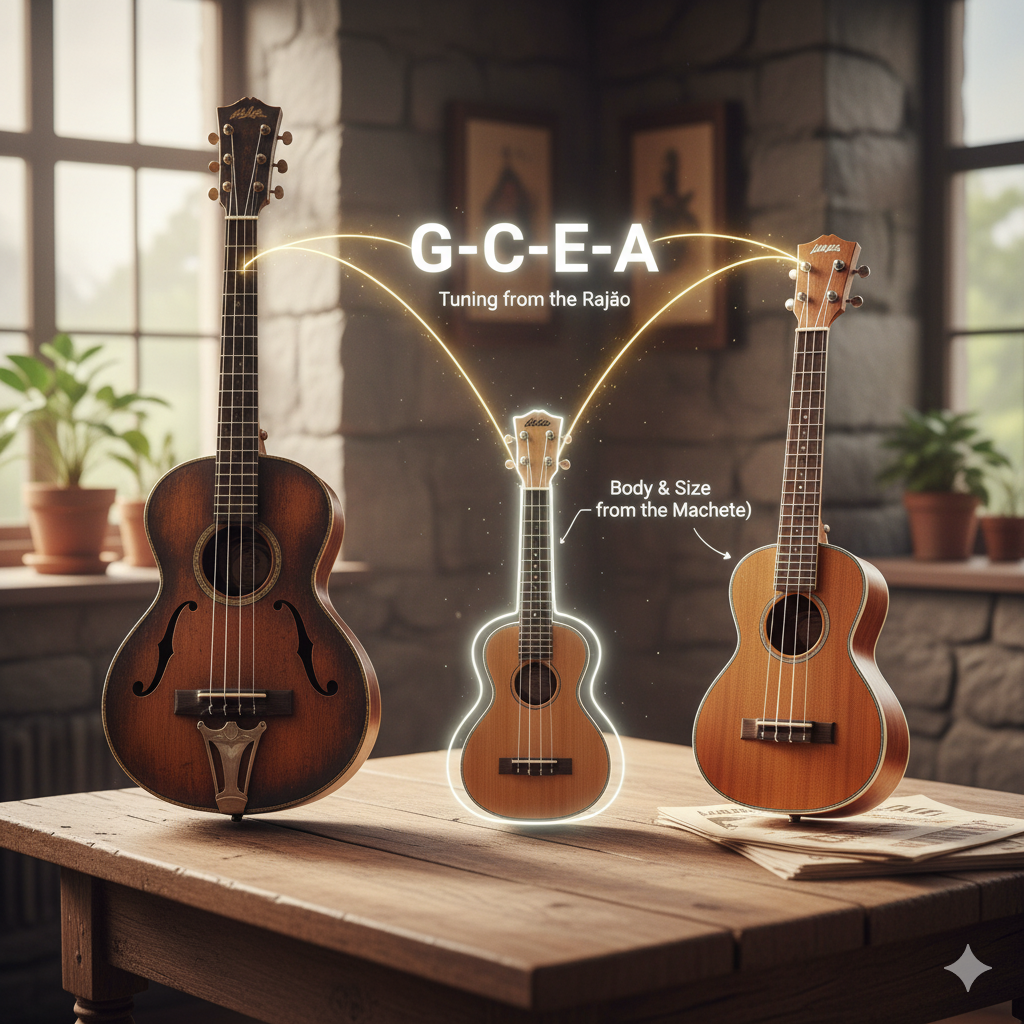
Early Hawaiian versions combined features of both Portuguese instruments.
Body & Size
Inspired by the machête, giving rise to the traditional types of ukulele we see today.
Tuning
The top four strings of the rajão created what we now call ukulele tuning: G–C–E–A
This helps answer common questions like:
What are the strings for ukulele? What are the notes for ukulele strings?
These strings give the ukulele its cheerful, bright sound.
4. Why Is It Called a “Ukulele”?
The Hawaiian word ukulele can mean “jumping flea.” It was likely inspired by the quick finger movements of players. So if you’ve wondered “What was the ukulele originally called?”—this name came directly from Hawaiian culture.
(Fun fact: Some spellings like “ukele,” “ukille,” or “cardigan ukele” appear online, but the correct spelling is “ukulele.”)
5. Royal Support That Changed Everything
King David Kalākaua embraced the ukulele at royal events, making it part of Hawaiian heritage. His support accelerated the evolution of the ukulele throughout the islands.
6. Evolution of the Ukulele: From Hawaii to the World
Koa Wood & Hawaiian Craftsmanship
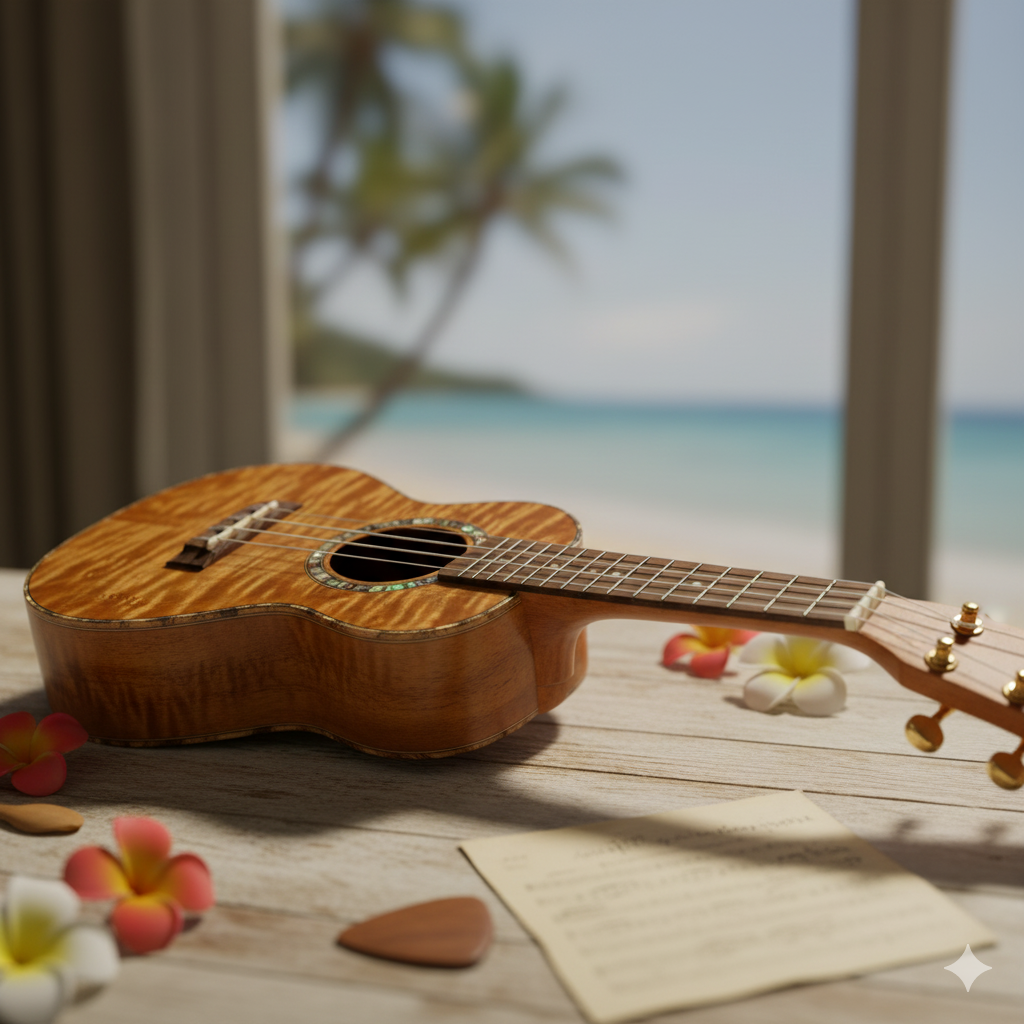
Hawaiians used koa wood, creating a warmer tone than earlier Portuguese instruments.
Global Expansion
By the early 20th century, the ukulele spread across:
Mainland USA Europe Asia
This marked a major shift in the ukulele cultural history, supported by jazz musicians, Hollywood films, and modern pop stars.
7. Types of Ukulele: How the Instrument Expanded
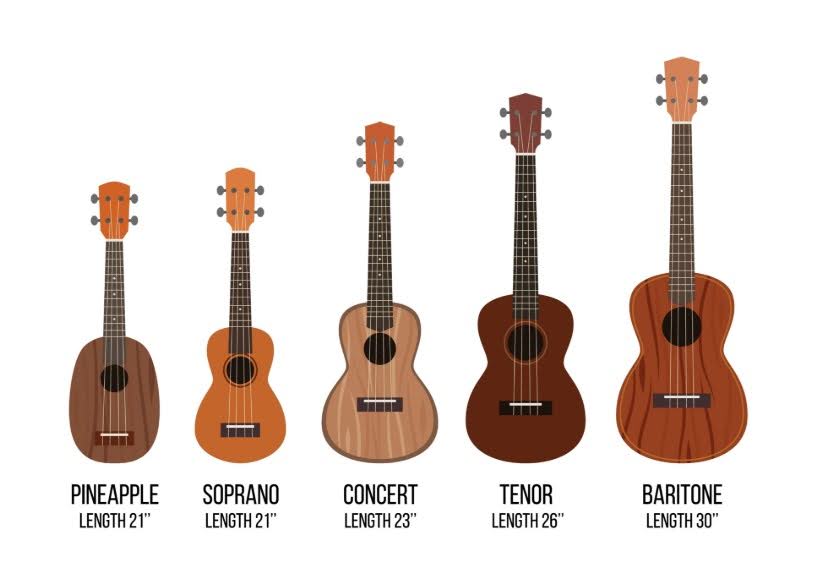
Today, there are several different types of ukulele and types of ukulele sizes:
Soprano – classic, traditional sound Concert – slightly larger, great for beginners Tenor – deeper, richer tone Baritone – closest to a guitar
Common question: What is the best type of ukulele for beginners? → Usually the soprano or concert.
Whether you’re learning ukulele chords, discovering types of ukulele strings, or asking is ukulele an instrument?”—yes, it absolutely is, and a popular one worldwide.
8. Ukulele Strings & Accessories
Popular topics beginners search for include:
Types of ukulele strings (nylon, fluorocarbon, gut) Ukulele tuner – essential for tuning Ukulele tuning – G-C-E-A Strings for the ukulele – varies by size Ukulele chords – the foundation of playing.
Tools and accessories helped transform the ukulele into a global favorite.
9. Ukulele Cultural History: A Global Icon
What started as a Portuguese folk instrument became:
A Hawaiian cultural symbol A global beginner-friendly instrument A favorite in schools, folk music, pop, indie, and classical A joyful, simple, travel-friendly instrument.
Today the ukulele holds a unique place in global music culture.
Conclusion
The ukulele history is a journey through Portugal, Hawaii, and the world. The origin of the ukulele lies in Portuguese craftsmanship, but Hawaiian culture shaped its identity. From the evolution of the ukulele to the many different types of ukuleles available today, its story is rich and inspiring.
Whether you’re exploring ukulele tuning, ukulele chords, strings for ukulele, or simply researching where the ukulele came from, this instrument’s past is as bright as its sound.