

Swiss Cheese Plant Care: How to Grow a Healthy Monstera Deliciosa Indoors

Swiss Cheese Plant Care Guide: How to Grow a Healthy Monstera Indoors
If you’re searching for a bold, eye-catching houseplant that’s easy to care for, the Swiss cheese plant is a fantastic choice for beginners and experienced plant lovers alike. Its dramatic leaves, fast growth, and forgiving nature make it a favorite among indoor gardeners. With just a little attention, your Swiss cheese plant can thrive for years and become a stunning feature in your home.
Swiss Cheese Plant Care Checklist
Here’s a quick overview of how to care for a Swiss cheese plant (also known as Monstera deliciosa or Monstera adansonii), whether you’re nurturing a brand-new plant or leveling up your Swiss cheese plant indoor care routine:
- Provide bright, indirect light — no harsh direct sun
- Water when the top layer of soil is mostly dry
- Keep temperatures between 15°C and 30°C
- Dust and mist leaves occasionally
- Use a moss or coir pole for climbing support
- Choose a light, airy mix — the best soil for Swiss cheese plant growth is well-draining
- Watch for common Swiss cheese plant problems like yellow leaves, drooping, or pests
About Swiss Cheese Plants
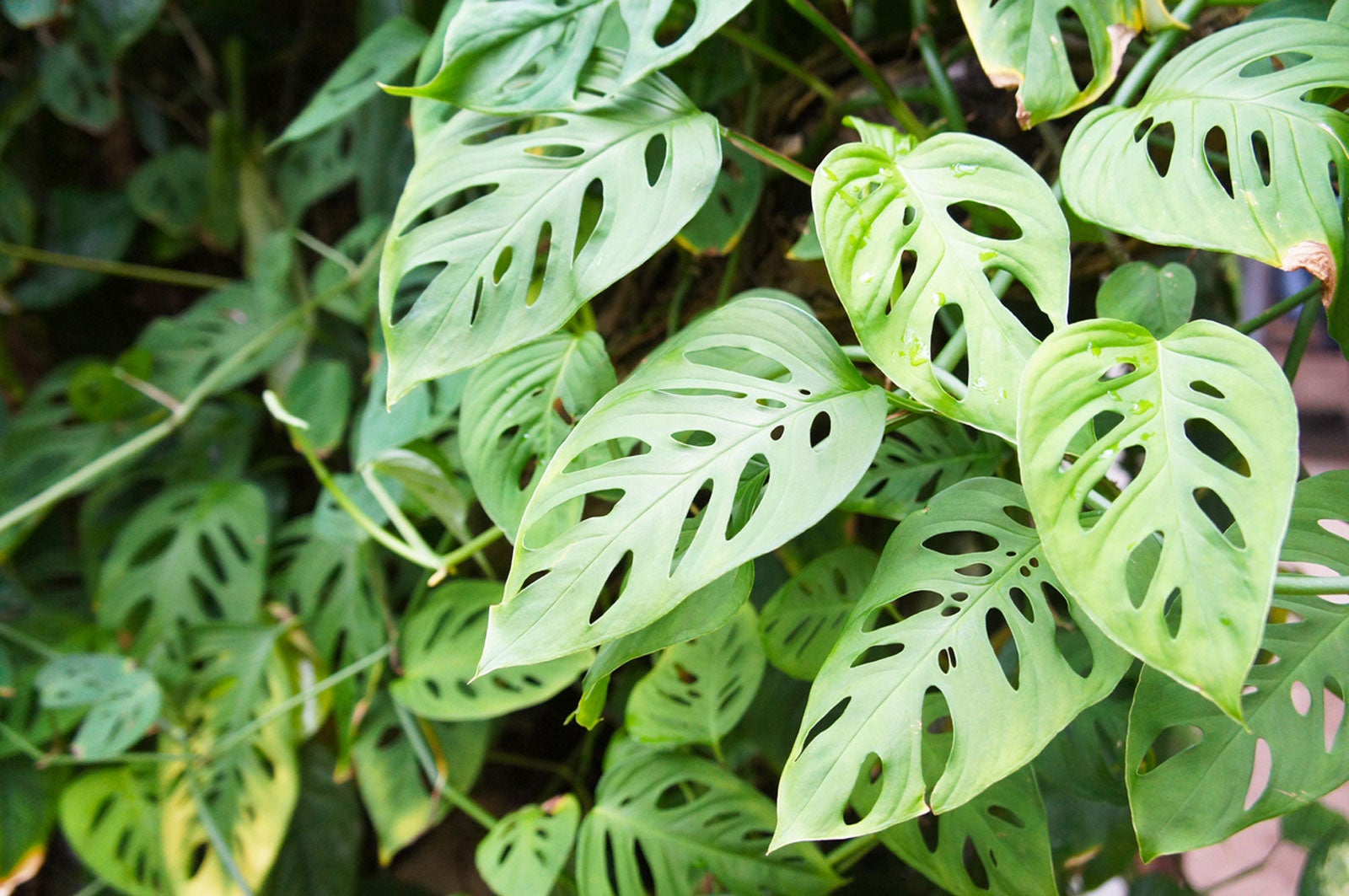
Swiss cheese plants are beloved for their dramatic, natural leaf perforations — the iconic “holes” that inspired their name. Their scientific name is Monstera deliciosa, but you’ll also hear them called custard plants, fruit salad plants, or Indian ivy in some regions. These plants originate from the dense, humid rainforests of Central and South America, where they climb tall trees to reach sunlight.
Their trademark holes (called fenestrations) help light pass through to the leaves below, a clever adaptation that allows them to grow large even in dark jungles. Outdoors in their native habitat, these plants can reach astonishing heights of up to 20 meters. Indoors, however, they’re far more manageable — though still capable of growing into generous, lush vines.
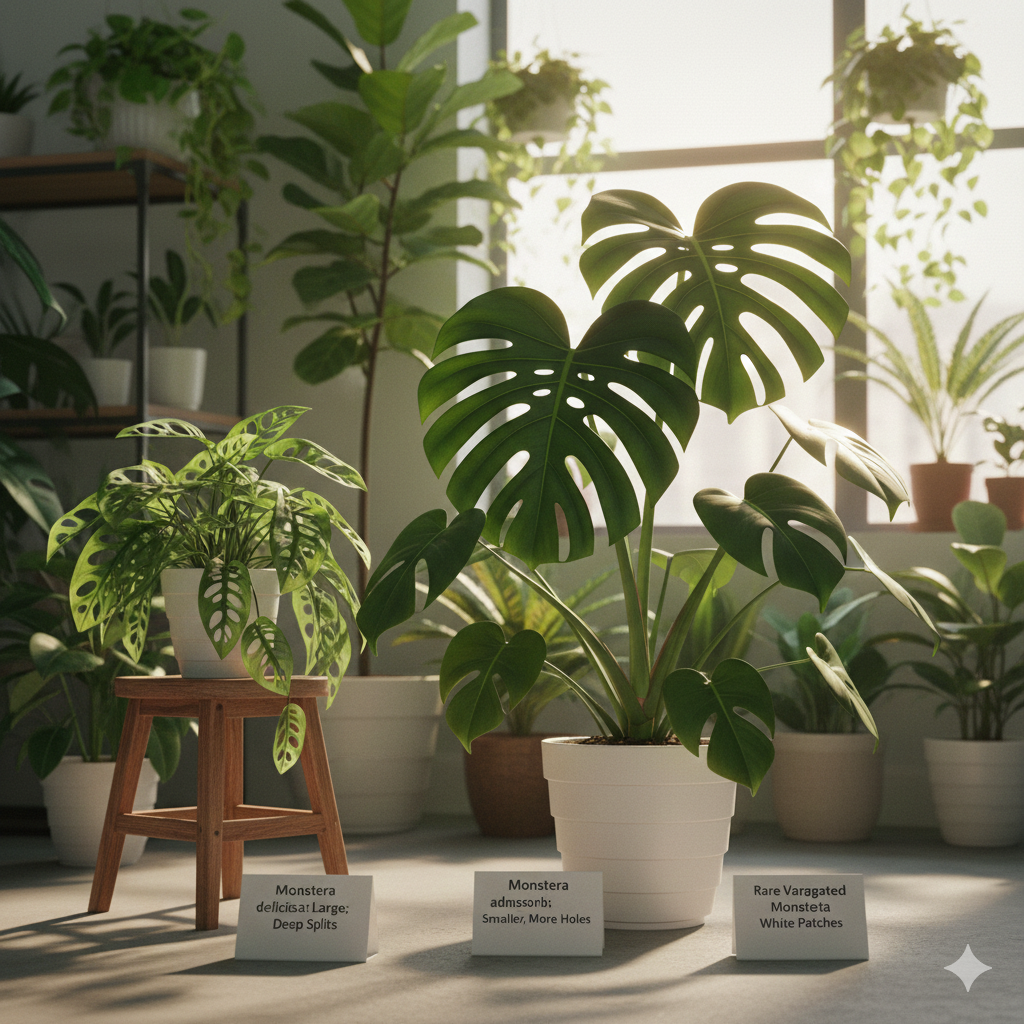
You may also come across different members of the Monstera family. For example:
Monstera deliciosa (classic Swiss cheese plant) — large, broad leaves with deep splits
Monstera adansonii — smaller leaves with more oval holes
Rare variegated Monsteras — creamy or white patches on the foliage
Both are often lumped together under the umbrella of “Swiss cheese plant,” which is why people sometimes wonder about the difference between Monstera deliciosa vs Swiss cheese plant. In simple terms: deliciosa is the large, iconic version, while adansonii is the smaller, hole-heavy cousin.
Are Swiss Cheese Plants Easy to Care For?
Absolutely — Swiss cheese plant care is wonderfully simple, whether you’re growing a monstera deliciosa Swiss cheese plant or a smaller adansonii. These plants prefer a slightly dry environment, don’t demand constant watering, and tolerate a variety of light conditions.
Their thick, glossy leaves and structured growth make them ideal statement plants. They’re also great for anyone wanting to learn how to care for Swiss cheese plant varieties without the stress of caring for a delicate species.
One important note: Swiss cheese plants are mildly toxic to pets and young children due to calcium oxalate crystals. Keep your indoor cheese plant somewhere out of reach of curious mouths.
How Often Should I Water My Swiss Cheese Plant?
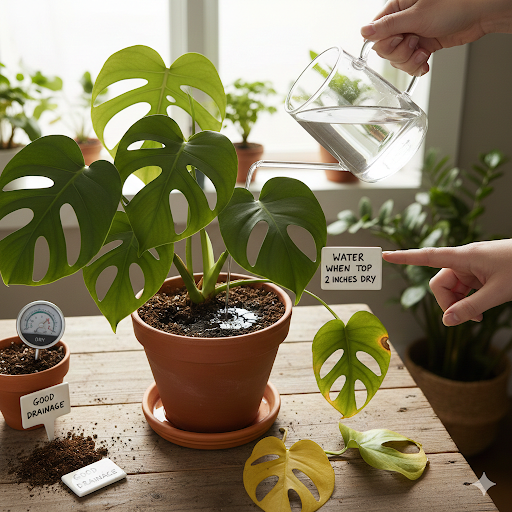
A key part of caring for a cheese plant is getting the watering schedule right. Swiss cheese plants prefer soil that dries out slightly between waterings. Here’s an easy guide:
Only water when the top 2–3 inches of soil are dry
Water thoroughly until it drains out of the bottom
Ensure the pot has good drainage holes
Never leave your plant sitting in water
Overwatering is one of the most common Swiss cheese plant problems. Yellowing leaves are usually a sign of watering too often, while dry, crispy edges may indicate under-watering.
To master swiss cheese plant watering guide basics, remember: when in doubt, wait a day or two. Monsteras prefer being slightly dry rather than soggy.
How Much Light Does My Swiss Cheese Plant Need?
When considering how to care for a Swiss cheese plant, lighting is essential. In the wild, they grow under the canopy of tall trees where sunlight is filtered through leaves. Indoors, they want the same effect: bright, indirect light.
Ideal Lighting Conditions:
Close to a bright window but not in direct sun
East-facing windows are great
They tolerate medium light but grow slower
Too little light leads to fewer leaf holes and leggy growth
One of the most common issues in swiss cheese plant care is placing the plant in deep shade. Without enough light, the leaves won’t develop the dramatic holes that Monsteras are famous for.
If you’re following swiss cheese plant light requirements carefully, aim for soft filtered brightness — never harsh sun.
What’s the Best Temperature for My Swiss Cheese Plant?
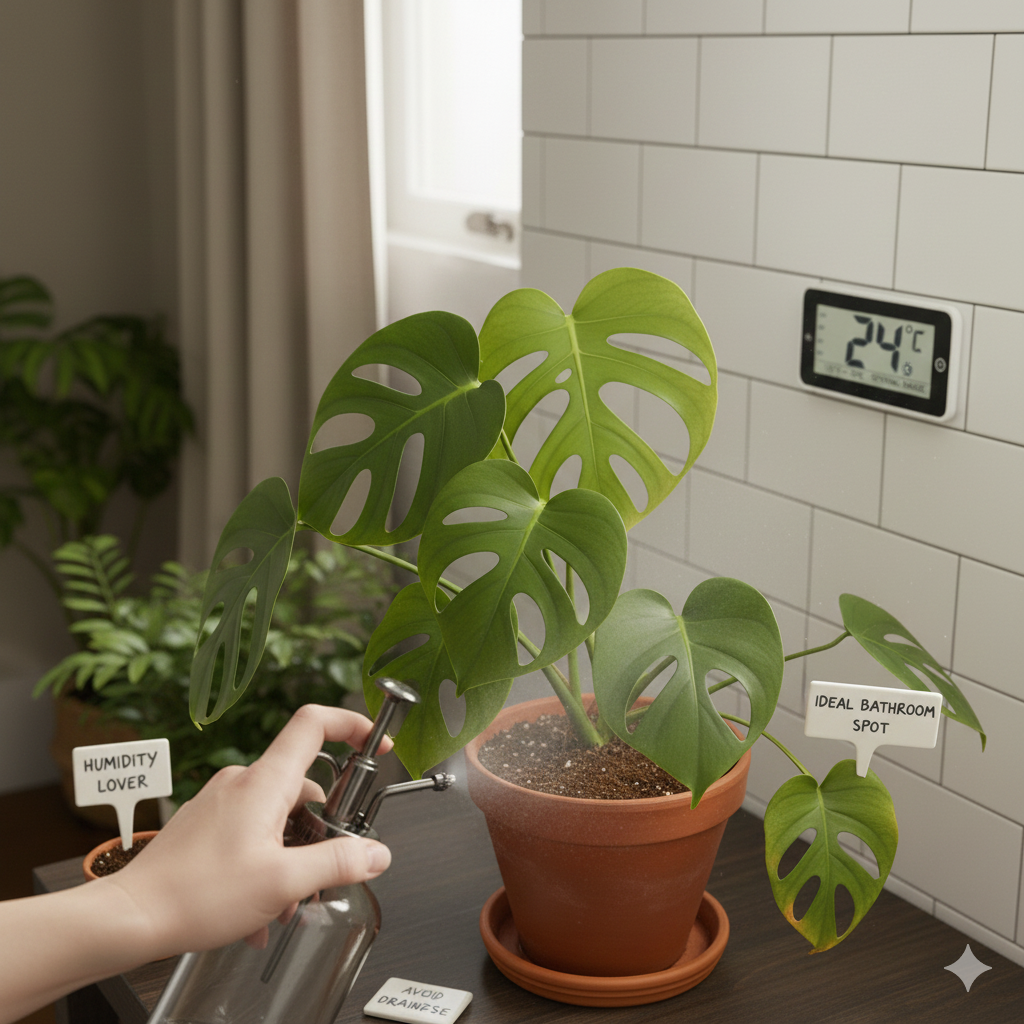
Monsteras thrive in warm, jungle-like conditions. The perfect temperature range is:
15°C to 30°C
Avoid:
Cold drafts
Dry, heated air
Sudden temperature changes
Humid rooms, such as bathrooms, are great spots for an indoor swiss cheese plant. If your air is dry, misting the leaves occasionally (especially in winter) supports healthy growth.
Should I Repot My Swiss Cheese Plant?
Because Monsteras grow quickly, repotting becomes part of regular Swiss cheese plant care. They also develop aerial roots that help them climb — which may stick out of the pot.
You’ll know it’s time to repot when:
Roots start poking out the drainage holes
The plant looks too large or top-heavy
Water drains too quickly through the soil
Repotting Tips:
Repot in spring for fastest recovery
Use a pot 1–2 inches larger
Choose the best soil for Swiss cheese plant growth: airy, chunky, well-draining mix
Add a moss pole to encourage upward growth
Repotting supports how to grow a Swiss cheese plant effectively, allowing them enough space to expand their root system.
Does My Swiss Cheese Plant Need Extra Maintenance?
To keep your Swiss cheese plant monstera looking its best, a little regular care goes a long way.
Easy Maintenance Tips:
Dust the leaves with a damp cloth every 2–3 weeks
Mist the foliage to boost humidity
Trim damaged or yellow leaves
Rotate the pot every few weeks for even growth
Feed monthly during spring and summer with liquid fertilizer
If you’re wondering how to grow Swiss cheese plant varieties into larger, fuller specimens, giving them a sturdy moss or coir pole offers excellent support for climbing and helps encourage bigger leaves.
Common Swiss Cheese Plant Problems (and How to Fix Them)
Even though cheese plant care is simple, a few issues can pop up occasionally. Here’s what to watch for:
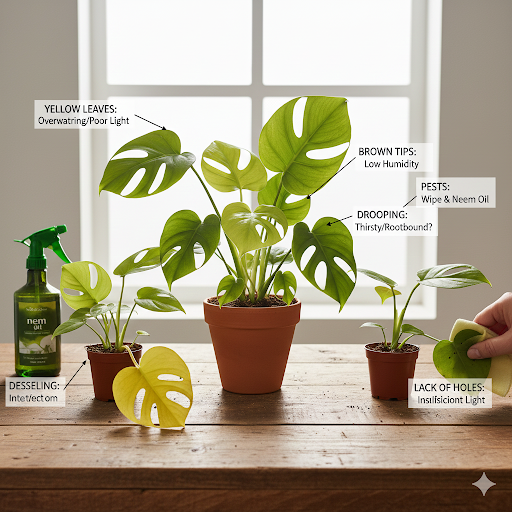
Yellow Leaves
Cause: Overwatering, underwatering, or poor light
Fix: Adjust watering schedule; ensure bright, indirect light
Brown Leaf Tips
Cause: Low humidity or inconsistent watering
Fix: Mist regularly; keep soil slightly moist
Drooping Leaves
Cause: Thirsty plant or rootbound pot
Fix: Water deeply; check if repotting is needed
Pests
Cause: Dry indoor air or dusty leaves
Fix: Wipe leaves and treat with neem oil spray
Lack of Fenestrations (No Holes in Leaves)
Cause: Insufficient light
Fix: Move the plant to a brighter location
By keeping an eye on these common swiss cheese plant problems, you can easily adjust your care routine and restore your plant’s health.
Final Thoughts: A Joyful Houseplant for Every Home
Swiss cheese plant care is wonderfully simple, rewarding, and beginner-friendly. Whether you’re learning how to care for a Swiss cheese plant for the first time or perfecting your Monstera plant care tips, these resilient and stylish plants can thrive with minimal effort. With the right light, watering routine, soil, and occasional maintenance, your plant will reward you with gorgeous, fenestrated leaves and lush jungle vibes.
If you’re ready for a forgiving, impressive, and Instagram-worthy plant, the Swiss cheese plant is undeniably one of the best you can grow indoors.