

Time Management Skills: Effective Techniques to Boost Productivity

Time Management Skills: Techniques, Strategies, and Practical Methods Explained
Managing time effectively has become one of the most valuable abilities in today’s fast-paced personal and professional life. Whether you’re a student, employee, manager, or entrepreneur, strong time management skills help you stay productive, reduce stress, and consistently achieve your goals.
This ultimate guide explores what time management is, how time management strategies, time management techniques, and time management methods differ, and how you can apply them in daily life to improve efficiency and focus.
What Is Time Management?
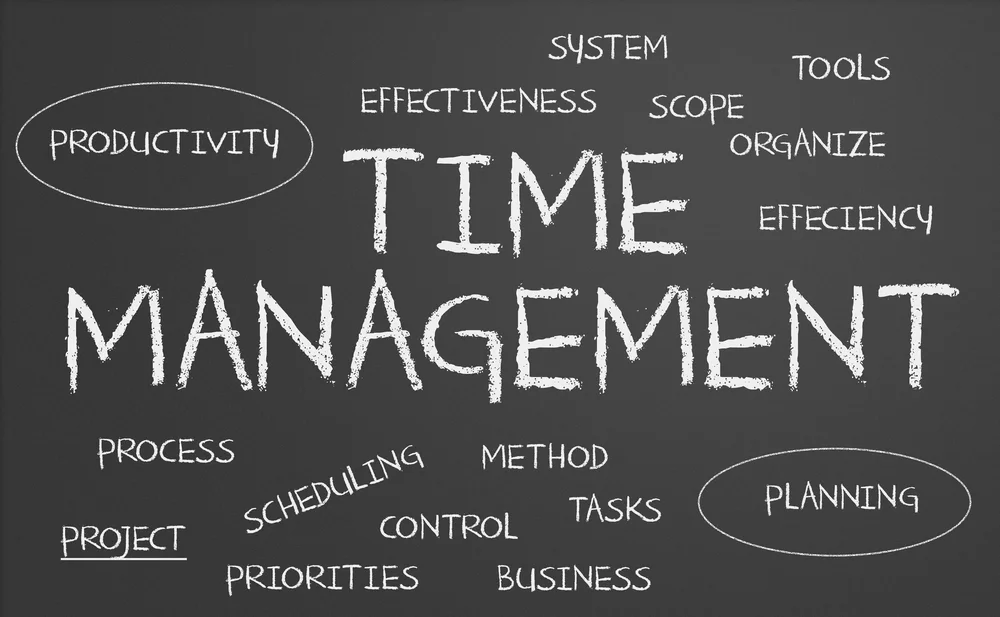
Time management refers to the process of planning, organizing, and controlling how much time you spend on specific activities. Understanding what time management is allows individuals to allocate the right amount of time to the right tasks.
At its core, time management is about working smarter—not longer. When people ask what time management means, the answer lies in intentional decision-making: choosing tasks based on importance, urgency, and long-term value.
Effective time management enables you to:
- Meet deadlines consistently
- Maintain work-life balance
- Reduce procrastination
- Improve overall performance
What Are Time Management Strategies?
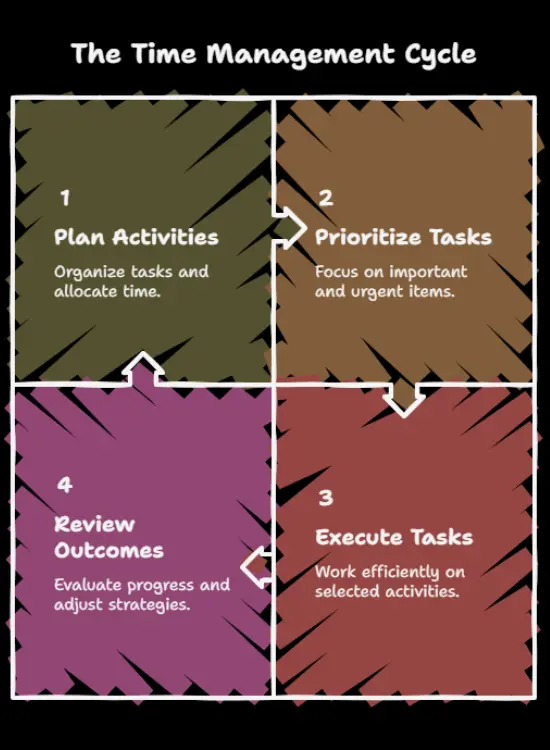
A time management strategy is a high-level plan used to organize tasks, responsibilities, and goals. Time management strategies often combine multiple techniques and skills to improve productivity over time.
Strong, effective time management strategies focus on:
- Prioritization
- Energy management
- Long-term planning
- Consistent execution
A strategy may include using digital time management tools, applying structured routines, or improving focus through habit-building.
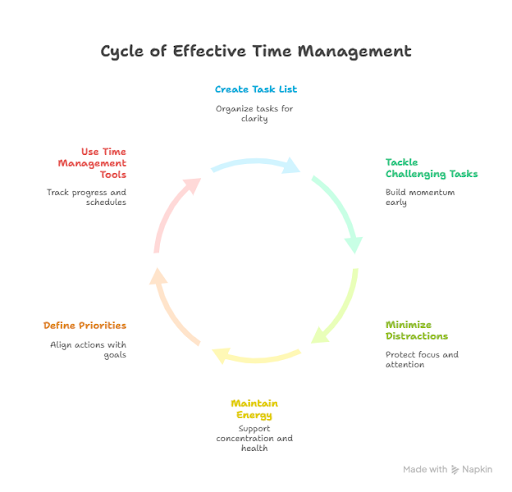
6 Proven Time Management Strategies
1. Create and Maintain a Task List
A structured task list helps clarify what needs to be done and when. Writing tasks down reduces mental clutter and improves follow-through.
Rank tasks by urgency and importance rather than ease. This approach strengthens decision-making and supports better time management skills in real-life situations.
2. Start With the Most Challenging Task
Completing your most demanding task early builds momentum. This method, often discussed in time management tips, helps reduce procrastination and mental fatigue later in the day.
3. Minimize Distractions
Distractions are one of the biggest threats to effective time use. Turning off notifications, using focus apps, and setting boundaries are practical time management methods that protect your attention.
4. Maintain Physical and Mental Energy
Time management is closely linked to health. Sleep, exercise, and proper nutrition directly influence concentration and decision-making, making them essential to effective time management.
5. Define Clear Priorities
Knowing what matters most helps prevent wasted effort. Prioritization allows you to align daily actions with long-term goals—a core principle of any strong time management strategy.
6. Use Time Management Tools
Digital planners, calendars, and productivity software make it easier to track progress and manage schedules. Choosing the right time management tools can dramatically improve consistency and accountability.
What Are Time Management Techniques?
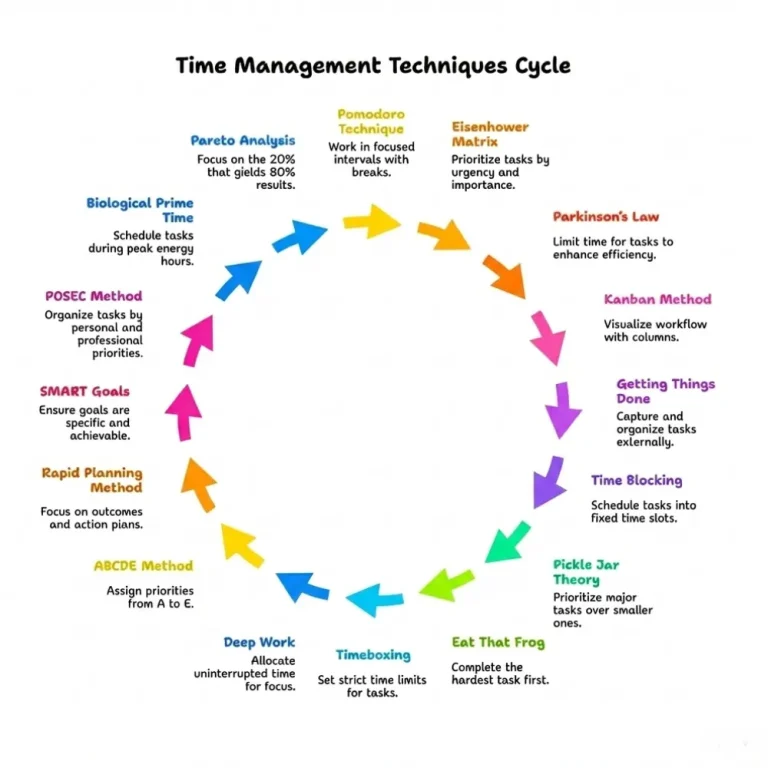
Time management techniques are specific systems or frameworks that help structure your time. Unlike strategies, techniques focus on execution.
Not all time management techniques work for everyone. The key is testing different approaches and adapting them to your work style, personality, and responsibilities.
17 Highly Effective Time Management Techniques
1. Pomodoro Technique
Work in short, focused intervals followed by brief breaks to maintain energy and concentration.
2. Eisenhower Matrix
Categorize tasks based on urgency and importance to improve prioritization and decision-making.
3. Parkinson’s Law
Limit the time assigned to tasks to improve efficiency and reduce unnecessary delays.
4. Kanban Method
Visualize tasks using columns such as “To Do,” “In Progress,” and “Completed” to track workflow.
5. Getting Things Done (GTD)
Capture all tasks externally, organize them by context, and execute with clarity.
6. Time Blocking
Schedule tasks into fixed time slots to create structure and accountability.
7. Pickle Jar Theory
Prioritize major tasks (“rocks”) before smaller, less important activities.
8. Eat That Frog
Complete the hardest task first to reduce stress and increase productivity.
9. Timeboxing
Set strict time limits for tasks to prevent overworking and distraction.
10. Deep Work
Allocate uninterrupted time for high-focus, high-value tasks.
11. ABCDE Method
Assign priorities from A (most important) to E (eliminate).
12. Rapid Planning Method (RPM)
Focus on outcomes, purpose, and action plans.
13. SMART Goals
Ensure tasks are Specific, Measurable, Achievable, Relevant, and Time-bound.
14. POSEC Method
Organize tasks based on personal and professional priorities.
15. Biological Prime Time
Schedule critical tasks during your peak energy hours.
16. Pareto Analysis
Focus on the 20% of efforts that produce 80% of results.
17. 1-3-5 Method
Complete one major, three medium, and five small tasks daily.
What Are Time Management Skills?
When people ask what is time management skills, they are referring to the abilities that allow individuals to plan, prioritize, and execute tasks efficiently.
Time management skills develop over time and improve with practice. They are essential for both personal growth and professional success.
9 Essential Time Management Skills
1. Organization
Keeping tasks, files, and schedules structured reduces stress and saves time.
2. Focus and Concentration
The ability to maintain attention on one task is critical for productivity.
3. Communication and Delegation
Clear communication and smart delegation prevent overload and improve collaboration.
4. Stress Management
Managing stress protects mental clarity and prevents burnout.
5. Avoiding Procrastination
Self-discipline and accountability are key to overcoming delays.
6. Prioritization
Understanding task importance ensures time is spent wisely.
7. Rest and Recovery
Strategic breaks maintain long-term performance and motivation.
8. Goal Setting
Clear goals provide direction and purpose, improving task alignment.
9. Scheduling
Planning daily and weekly schedules strengthens consistency and reliability.
Differences Between Time Management Strategies, Techniques, and Skills
Although closely related, these concepts serve different purposes:
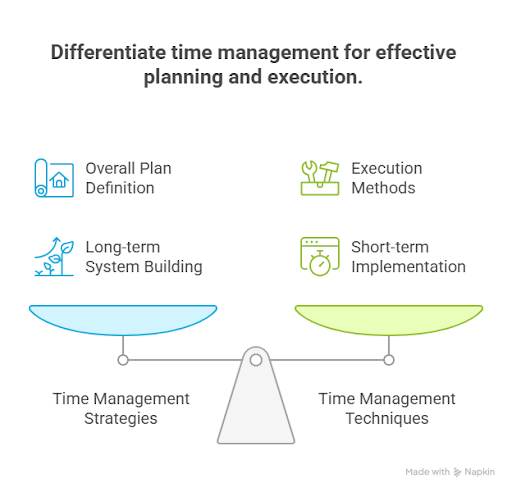
- Time management strategies define the overall plan
- Time management techniques provide execution methods
- Time management skills enable effective implementation
Understanding these differences allows you to build a personalized system that works long-term.
Conclusion
Time management is not about doing more—it’s about doing what matters most. By mastering time management skills, applying proven time management techniques, and adopting flexible time management strategies, you can improve productivity without sacrificing balance.
Whether you’re learning how to manage time at work, school, or in daily life, consistent practice and thoughtful planning will help you stay focused, efficient, and in control of your schedule.