


Essential Entrepreneurial Skills

A Guide to Entrepreneurial Skills: Definition, Importance, and Examples
Entrepreneurship plays a vital role in driving innovation, economic growth, and job creation worldwide. At the core of every successful entrepreneur is a combination of skills and competencies that enable them to navigate challenges, identify opportunities, and scale businesses effectively. These capabilities are collectively referred to as entrepreneurial skills, which encompass both hard skills such as financial management and technical expertise, as well as soft skills like leadership, communication, and strategic thinking.
This comprehensive guide explores what entrepreneurial skills are, why they matter, examples of essential skills, and practical strategies for developing them. Whether you are a budding entrepreneur, a business student, or a professional looking to enhance your business acumen, understanding these skills is key to achieving long-term success.
What Are Entrepreneurial Skills?
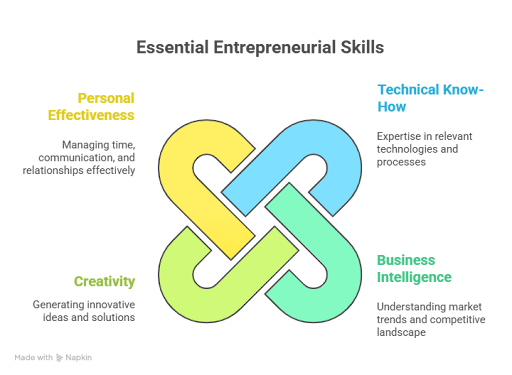
Entrepreneurial skills refer to the abilities, knowledge, and attributes that enable individuals to establish, operate, and grow a business successfully. These skills combine technical know-how, business intelligence, creativity, and personal effectiveness. They are often described in terms of entrepreneurship skills, skills of an entrepreneur, or entrepreneurship and entrepreneur competencies.
Developing these skills is essential not only for starting a business but also for managing complex operations, leading teams, and making strategic decisions that drive growth. For professionals, having strong entrepreneurial skills for success can enhance career opportunities, even in roles outside of entrepreneurship.
Key takeaway: Every entrepreneur requires a combination of practical and interpersonal skills to manage their business effectively while navigating uncertainties.
Why Entrepreneurial Skills Matter
Entrepreneurial skills are crucial because they:
Enable informed decision-making – Skills like strategic thinking and analytical abilities allow entrepreneurs to evaluate opportunities and make data-driven choices.
Drive business growth – Competencies such as marketing, financial management, and technical expertise help scale operations efficiently.
Foster innovation – Creativity and problem-solving skills allow entrepreneurs to identify new products, services, or processes.
Build leadership capacity – Leadership, teamwork, and communication skills are essential to manage teams and inspire others.
Improve resilience – Entrepreneurs face risks and setbacks; strong skills help them adapt and recover.
In addition, strong entrepreneurial skills enhance employability and professional credibility, making them valuable even outside the context of starting a business. Understanding what are the entrepreneurship skills and integrating them into your professional toolkit can position you for long-term success.
Examples of Essential Entrepreneurial Skills
Entrepreneurial skills are broad and encompass several categories, including technical, managerial, and interpersonal competencies. Below is a detailed breakdown of critical skills every entrepreneur should develop:
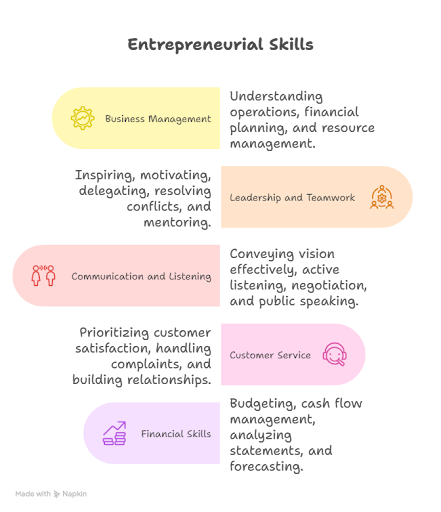
1. Business Management Skills
Effective entrepreneurs must understand business operations, financial planning, and resource management. Skills required for entrepreneurship in this category include:
Budgeting and financial forecasting
Operations management
Project planning and execution
Decision-making under uncertainty
These abilities allow entrepreneurs to oversee day-to-day activities, ensure profitability, and manage resources efficiently.
2. Leadership and Teamwork
Strong leadership is a hallmark of successful entrepreneurs. Skills of an entrepreneur in this area involve:
Inspiring and motivating team members
Delegating responsibilities appropriately
Resolving conflicts professionally
Mentoring and coaching staff
Entrepreneurs often wear multiple hats, so the ability to lead a team while fostering collaboration is critical.
3. Communication and Listening
Entrepreneurs must convey their vision effectively to stakeholders, clients, and employees. This includes:
Clear and concise verbal and written communication
Active listening and understanding stakeholder needs
Negotiation and persuasion
Public speaking and presentation skills
Effective communication supports brand promotion, business growth, and relationship building.
4. Customer Service and Relationship Management
Entrepreneurs must prioritize customer satisfaction and engagement. Entrepreneurship skills development in this area includes:
Understanding client needs and expectations
Handling complaints and feedback professionally
Building lasting customer relationships
Networking and partnership management
Strong relationship management drives repeat business and referrals, critical for sustainable growth.
5. Financial and Analytical Skills
Managing finances is central to entrepreneurial success. Entrepreneurs must be capable of:
Budgeting and cash flow management
Analyzing financial statements
Forecasting and planning for growth
Using financial tools and software effectively
These skills ensure business stability and informed decision-making.
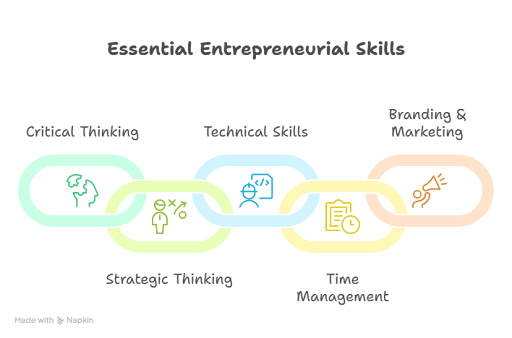
6. Critical Thinking and Problem Solving
Entrepreneurs encounter challenges daily. Skills of an entrepreneur in this domain include:
Identifying problems and evaluating solutions
Making data-driven decisions
Innovating to overcome obstacles
Strategic risk assessment
Strong analytical and problem-solving skills help entrepreneurs turn challenges into opportunities.
7. Strategic Thinking and Planning
Strategic thinking is essential for long-term business success. Key skills include:
Market analysis and competitive assessment
Goal setting and prioritization
Resource allocation for maximum impact
Long-term vision and business scaling
Entrepreneurs who master strategic planning can adapt to market changes and maintain a competitive edge.
8. Technical Skills
In today’s digital age, entrepreneurial skills increasingly involve technical proficiency:
Familiarity with software for accounting, marketing, or project management
Data analytics and digital marketing tools
E-commerce platforms and technology solutions
Understanding of cybersecurity and IT best practices
Entrepreneurs with strong technical skills can leverage technology for operational efficiency and growth.
9. Time Management and Organizational Skills
Efficient entrepreneurs prioritize tasks and manage their time effectively. Skills include:
Setting goals and deadlines
Delegating tasks and managing teams
Organizing work processes for maximum productivity
Using technology to streamline workflows
Proper time management ensures that business objectives are met consistently.
10. Branding, Marketing, and Networking Skills
Building a brand and a professional network is essential. Entrepreneurs should develop skills in:
Brand positioning and messaging
Digital and traditional marketing strategies
Networking and relationship building with peers and mentors
Influencer engagement and public relations
These skills directly impact market reach and the entrepreneur’s reputation.
How to Develop Entrepreneurial Skills
Entrepreneurial skill development is an ongoing process. Here are practical strategies for growth:
Take courses: Enroll in business, finance, marketing, or leadership programs to strengthen technical and managerial skills.
Attend workshops and events: Gain exposure to real-world challenges, learn from experienced entrepreneurs, and expand your professional network.
Seek mentorship: Experienced entrepreneurs can provide guidance, feedback, and practical insights into managing a business.
Practice leadership: Volunteer for team lead roles, manage projects, and actively seek opportunities to refine decision-making and interpersonal skills.
Learn financial management: Understand budgeting, accounting, and cash flow management. Tools and mentorship can help develop these critical competencies.
By consistently investing in skill development, aspiring entrepreneurs can enhance their effectiveness and readiness for business challenges.
Entrepreneurial Skills in the Workplace
Even if you’re not running your own business, entrepreneurship skills can be applied in corporate or organizational settings:
Lead projects or teams: Take on leadership roles to practice decision-making and team management.
Assist coworkers with organization: Help others manage time and resources, strengthening teamwork skills.
Transfer business skills: Apply analytical, financial, or marketing skills to projects within your company.
Learn from supervisors: Observe management strategies, problem-solving techniques, and operational methods.
These workplace applications reinforce your entrepreneurial skill set while adding value to your current role.
Highlighting Entrepreneurial Skills in Your Career
Employers value entrepreneurial competencies in various industries. Here’s how to showcase them:
On a Resume
- Include technical, leadership, and management skills
- Highlight accomplishments that demonstrate problem-solving and strategic planning
- Mention instances of innovation, initiative, or business impact
In a Cover Letter
- Describe how your skills contributed to measurable outcomes
- Emphasize leadership, innovation, and entrepreneurial initiative
- Illustrate how you can bring value to the company
During Interviews
- Provide examples of successfully managed projects
- Explain strategies for problem-solving and decision-making
- Demonstrate networking, marketing, or financial management skills
Effectively communicating your entrepreneurial abilities strengthens your candidacy and positions you as a proactive, results-driven professional.
Global Perspective: International Entrepreneur Rule News
For entrepreneurs looking to expand internationally, staying updated with regulations such as the International Entrepreneur Rule can be critical. This U.S.-based policy allows certain foreign entrepreneurs to operate and scale businesses in the United States. Knowledge of such policies is part of entrepreneur skill development, ensuring entrepreneurs can navigate legal and operational requirements effectively.
Conclusion: Building a Strong Entrepreneurial Skill Set
Entrepreneurial skills are essential for anyone looking to succeed in business, whether starting a new venture or growing a corporate career. From leadership and communication to financial management and strategic thinking, these skills empower entrepreneurs to innovate, adapt, and drive success.
By understanding what is an entrepreneur, the skills required for entrepreneurship, and how to cultivate them through courses, mentorship, and practical experience, you can position yourself as a capable, resilient, and innovative professional. Developing these competencies is not only critical for launching and scaling a business but also for thriving in today’s competitive corporate and global markets.
Invest in building your entrepreneurial skills for success, continuously refine your approach, and apply your abilities across projects, teams, and ventures to achieve measurable growth and long-term results.