


A Complete Guide to Business Attire for Modern Professionals

Business attire has evolved significantly over the years, yet its purpose remains the same: to present a polished, professional image that reflects competence and respect for the workplace. Whether you are preparing for a job interview, starting a new corporate role, or navigating a hybrid work environment, understanding what business attire means and when it’s required is essential.
This comprehensive guide breaks down everything you need to know about business attire for both men and women, explains the difference between professional, formal, and business casual dress codes, and offers practical style tips for every season. From traditional outfits to modern interpretations, this business attire guide will help you dress with confidence, clarity, and professionalism.
What Is Business Attire?
Business attire refers to the clothing professionals wear in corporate, professional, or formal office environments. It can range from conservative business professional attire to more relaxed business casual attire, depending on the company culture and occasion. Regardless of the dress code, the main goal is to look neat, competent, and workplace-appropriate.
Different companies define business attire in their own way, but most follow four main categories:
Business Professional
Most formal daily office wear
Business Formal
The highest level of workplace attire for special events
Business Casual
Modern, relaxed workplace standard
Smart Casual
Stylish yet polished, often used in creative fields
Understanding which style applies to your environment ensures you feel well-prepared and confidently dressed for every scenario.
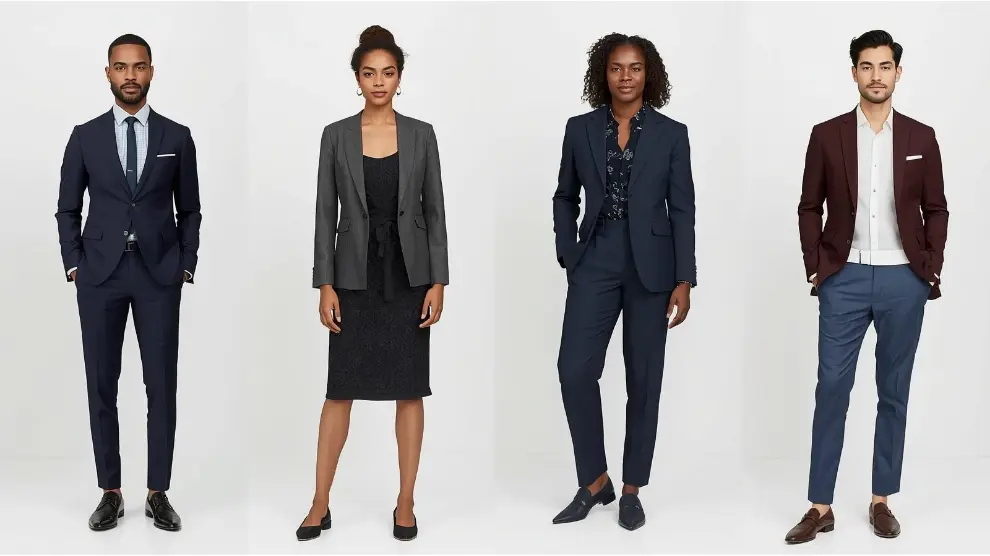
When and Where Is Business Attire Required?
Depending on your industry, professional dress code expectations can vary greatly. Traditional sectors like finance, banking, law, real estate, politics, and insurance typically expect employees to dress formally or semi-formally. These industries rely heavily on building trust and presenting a reliable image, making appearance an important aspect of professional etiquette.
Business attire is often required for:
- Job interviews
- Corporate office jobs
- Client meetings or presentations
- Conferences or industry events
- Company ceremonies or celebrations
- Management or executive-level roles
- Court appearances (for legal professionals)
Even in workplaces where business casual attire is common, employees may still need to shift to a more formal look for certain events, such as pitching to clients, delivering reports, or participating in official business functions.
In creative, tech, or startup companies, the dress code may be more relaxed. However, understanding what business attire is ensures you know how to adjust your outfit depending on the occasion.

Choosing the Right Colors for Business Clothing
A key component of business attire is choosing appropriate colors that communicate professionalism and confidence. Neutral shades remain the foundation of both men’s and women’s business wardrobes because they convey seriousness without distracting from your message or presence.
Recommended Colors:
- Black, charcoal, navy blue, and deep grey for suits and blazers
- White, ivory, light blue, soft grey, and pale pink for shirts or blouses
- Beige, taupe, camel, and muted pastels for accessories or layered pieces
For formal corporate events or higher leadership roles, darker tones are typically preferred. These colors create a composed, trustworthy impression and align well with the expectations of traditional business environments.
Modern workplaces sometimes allow more freedom with subtle patterns, muted hues, or textured fabrics, as long as they maintain a refined, distraction-free appearance.
Seasonal Business Attire: Dressing for Summer and Winter
A well-curated professional wardrobe adapts to seasonal changes while keeping comfort and elegance in mind.
Summer Business Attire
Warm months can make business dressing more challenging, but lighter fabrics and smart styling can help you avoid discomfort:
- Choose breathable materials like cotton, linen blends, or lightweight wool.
- Opt for unlined jackets or airy blazers.
- Avoid revealing clothing, short skirts, sleeveless tops, or open-toe shoes, these are not considered business professional even in summer.
- Stick with structured silhouettes that maintain a polished look.

Winter Business Attire
During colder months, thicker materials and classic outerwear elevate your professional look:
- Select fabrics like wool, cashmere blends, tweed, and flannel.
- A well-fitted coat, structured trench, or tailored long jacket adds sophistication.
- Accessories like gloves, scarves, and hats should be neutral and elegant.
- Layering is key, use vests, sweaters, and thermal undershirts that don’t add bulk.

Your seasonal choices should support both appearance and comfort, ensuring you stay polished year-round.
Business Professional Attire for Men
For corporate or conservative environments, men’s business professional attire remains relatively traditional. The goal is to create a clean, classic look that demonstrates professionalism and respect for the dress code.
Key Components of Business Attire for Men:
- Formal suit in navy, charcoal, or deep grey
- Crisp, light-colored dress shirt, white or pale blue
- Conservative tie (not overly bold or flashy)
- Black or brown leather shoes with a matching belt
- Subtle accessories like a classic watch or cufflinks
- Structured overcoat for colder seasons
- Neatly groomed appearance, including hair and facial hair
Style Tips:
- Ensure your suit fits well, shoulders aligned, sleeves at wrist level, trousers hemmed properly.
- Your tie should hit the beltline and be darker than the shirt.
- Avoid overly strong fragrances or distracting accessories.
- Choose dark socks that match your trousers.
Understanding business attire helps male professionals maintain a sharp, appropriate image in any formal setting.

Business Professional Attire for Women
Women have wider style options in business attire, but the same core principles apply: neatness, modesty, and refinement. Whether you prefer dresses, skirts, or tailored pants, a structured, well-fitted look forms the foundation of professional dressing.
Women Business Attire Should Include:
- Tailored pantsuits or skirt suits
- Knee-length sheath dresses or structured business dresses
- Blouses in soft, neutral shades
- Closed-toe shoes such as pumps or loafers
- Classic trench coat or long coat
- Minimal, elegant jewelry
- Professional handbags or briefcases
Style Guidelines:
- Dresses and skirts should reach the knee.
- Shoulders should be covered in all professional settings.
- Choose heels under 7 cm for comfort and formality.
- Keep makeup soft and natural for a daytime look.
- Stick to high-quality fabrics that maintain shape throughout the day.

Business Casual vs Formal
Many people struggle to distinguish business casual attire from business formal attire, especially since workplaces interpret these terms differently.
Business Casual Attire
- Allows for more relaxed clothing
- Includes chinos, smart trousers, sweaters, blouses, and simple dresses
- Often, no tie is required for men
- Shoes can be loafers or flats

Business Formal Attire
- Highest level of business dressing
- Required for events like ceremonies, board meetings, or corporate galas
- Includes dark suits, tie, and polished shoes for men
- Tailored dresses or skirt suits for women
- More refined accessories and darker color palette
Knowing the difference helps professionals match their outfits to the required level of formality.

Modern Interpretations of Classic Business Attire
While traditional corporate dressing still exists, many workplaces now encourage a more modern approach. This allows individuals to blend classic silhouettes with subtle contemporary elements.
For Men:
- Slim-fit or tailored suits
- Light patterns like micro-checks or pinstripes
- Soft-colored ties or pocket squares
- Modern dress shoes such as monk straps or sleek loafers

For Women:
- Wide-leg trousers paired with structured blazers
- Neutral patterns like checks or minimal prints
- Soft-shoulder blazers or wrap-style dresses
- Sleek pumps or block heels

Additional Practical Tips for a Strong Business Wardrobe
Invest in Quality Basics
A few high-quality suits, blazers, shirts, and shoes can create dozens of outfit combinations. Good tailoring is essential for both comfort and appearance.
Maintain Your Clothing
Polished shoes, pressed shirts, lint-free jackets, and clean accessories elevate your visual credibility instantly.
Dress Based on Role and Audience
Client-facing roles require more formal attire than internal office work. Adjust accordingly.
Avoid Overly Trendy Pieces
Trends fade quickly, but a timeless business wardrobe supports your professional image long-term.
Business Attire for Hybrid and Remote Work
As hybrid work environments grow, the definition of business attire continues to evolve. While remote meetings may tempt professionals to dress casually, maintaining a workplace-ready look, at least from the waist up, helps project confidence during video calls. Neutral blouses, structured tops, and simple accessories ensure you appear polished on-screen. Understanding modern expectations of business professional attire for women and men allows you to strike the right balance between comfort and professionalism in remote settings.
Common Mistakes to Avoid in Business Attire
Even small oversights can undermine an otherwise well-planned outfit. Avoid wearing wrinkled clothing, overly casual shoes, loud patterns, or distracting jewelry. Men should ensure ties are not too bold, while women should avoid overly bright makeup or large accessories. Sticking to the fundamentals of professional dress code guidelines ensures you remain polished and appropriately dressed in all business environments.
Why Business Attire Matters Today
In a world where many companies embrace relaxed dress codes, business attire continues to play an important role in shaping first impressions. Dressing professionally helps build trust, demonstrates respect, and signals your readiness to represent the company. Whether you’re wearing business formal attire, a structured suit, or modern business casual outfits, the way you dress influences how others perceive your professionalism and reliability.
Dress with Confidence and Purpose
Business attire is more than just clothing, it’s a language. It communicates professionalism, competence, and respect for the environment you work in. Whether you’re assembling a wardrobe for daily office wear or preparing for a special corporate event, understanding the nuances of business attire, business professional attire, and business casual attire helps you present the best version of yourself. By following the guidelines in this comprehensive business attire guide, you can create a polished, modern, and confident look that supports your career growth and reflects your personal style.
FAQs
What is business casual attire for men?
It typically includes items like dress slacks or chinos, a button-down shirt or polo, and dress shoes or loafers. You may skip the tie, but a well-fitted blazer is a nice touch if you want to elevate the look.
The key is to look polished yet approachable; think neat and professional but comfortable enough for a more laid-back office setting. It’s also important to pay attention to colors and patterns, keeping them subtle and appropriate for the workplace.