

Best Critical Thinking Exercises to Boost Problem Solving Skills

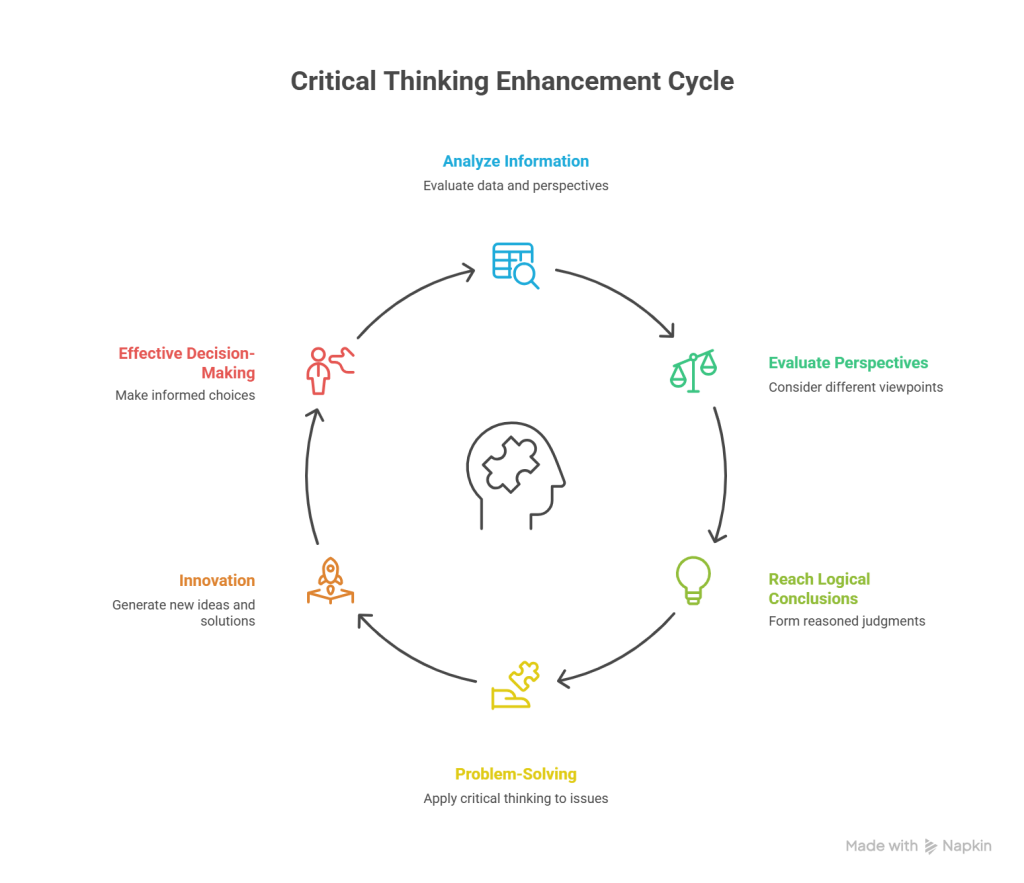
Have you ever wondered why some people seem to make smarter decisions and solve problems effortlessly while others struggle? The difference is critical thinking, a skill that enables you to analyse information, evaluate different perspectives, and reach logical conclusions. Critical thinking is more than just reasoning. It is the foundation for problem-solving, innovation, and decision-making in everyday life, from personal choices to professional challenges.
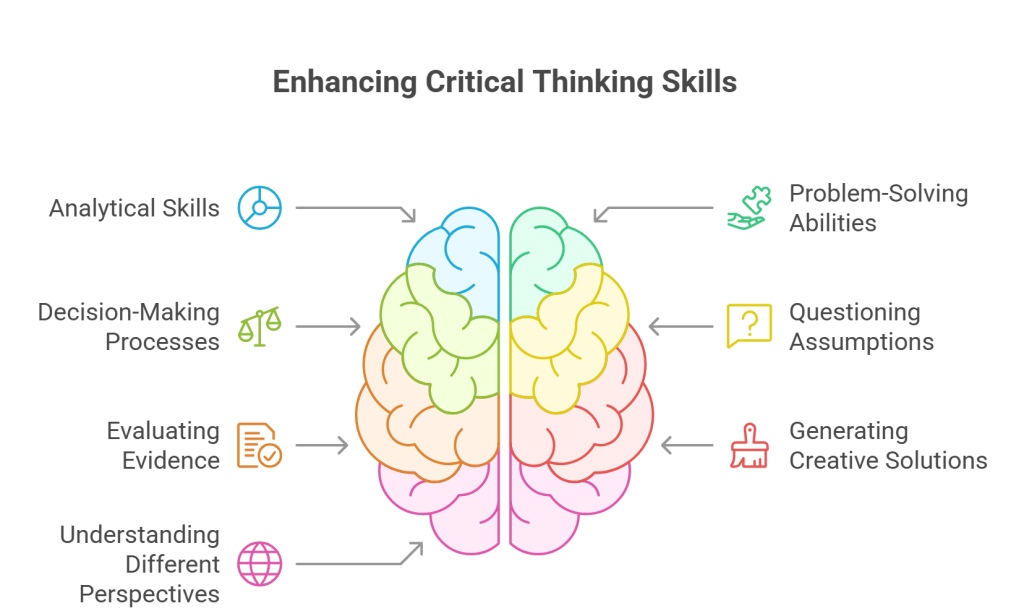
In today’s fast-paced world, critical thinking is essential. Whether you are a student navigating complex subjects, a professional making strategic decisions, or a leader managing teams, the ability to think critically allows you to make better choices and anticipate potential outcomes. It involves questioning assumptions, challenging biases, considering alternative solutions, and thinking independently rather than relying solely on conventional wisdom or popular opinion.
The good news is that critical thinking can be developed through consistent practice. While some people may seem naturally analytical, everyone can sharpen these skills with the right exercises. Engaging in activities that challenge your logic, reasoning, and decision-making helps your mind become more adaptable, objective, and solution-focused. By incorporating critical thinking exercises into your routine, you train your brain to approach problems systematically and creatively.
In this blog, we will explore 60 powerful exercises designed to enhance your critical thinking skills. Each activity is explained with purpose, implementation, and benefits, ensuring you can start applying them immediately in your personal and professional life.
60 Critical Thinking Exercises
1. The 5 Whys
This exercise encourages you to dig beneath the surface of a problem by asking “Why?” five times. Each answer becomes the next “why” question. It helps uncover root causes instead of treating symptoms.
It’s useful in everyday decision-making, project management, academic learning, and personal growth. By the fifth “why,” you often reach the real issue that needs fixing.
2. Perspective Shifting
This activity asks you to examine an issue from different viewpoints—friend, stranger, expert, critic, and opponent. It teaches empathy and broadens your understanding.
By stepping out of your own worldview, you develop stronger reasoning and reduce bias in your decisions.
3. Mind Mapping
Create a visual map of ideas branching from a central topic. This enhances creativity and helps you organize complex information.
Mind maps are great for planning essays, solving problems, organizing thoughts before meetings, and studying challenging topics.
4. Compare and Contrast
Choose two items (ideas, methods, products) and list similarities and differences. This improves evaluation skills.
It strengthens your ability to identify advantages, disadvantages, and logical choices when analyzing options.
5. The Scenario Challenge
Imagine a hypothetical problem—for example, “Your laptop crashes before a presentation.” Describe how you would solve it step-by-step.
This strengthens problem-solving and prepares you for real-life decision-making.
6. Fact vs Opinion Sorting
Take a paragraph or list of statements and separate facts from opinions. This helps you detect bias and evaluate information more logically.
It is especially useful in the age of misinformation and social media influence.
7. The Decision Matrix
List options and evaluate them across categories such as cost, time, risk, and benefit. Score each and pick the strongest.
This method makes complex decisions more structured and objective.
8. Reverse Brainstorming
Instead of asking, “How do we solve this?” ask, “How could we make this problem worse?” Then reverse the ideas.
This creative twist helps uncover overlooked solutions and hidden risks.
9. Assumption Challenging
List all assumptions you have about a situation and test whether they are true. Many problems exist because assumptions go unchallenged.
This strengthens independence of thought and reduces reliance on outdated beliefs.
10. The Evidence Test
Whenever you make a claim, ask, “What is my evidence?” and “Is it reliable?” This builds analytical discipline.
Great for students, researchers, journalists, and anyone evaluating online content.
11. Pattern Recognition Drills
Study patterns in numbers, behaviors, or trends and try to predict the next step. This boosts strategic thinking.
Pattern recognition is essential in business forecasting, finance, research, and technology fields.
12. Brainwriting
Each person writes ideas silently instead of speaking them. This avoids group-think and encourages deeper thinking.
Works well in classrooms and offices where some voices dominate discussions.
13. The Logic Grid Puzzle
Solve a puzzle using clues about people, objects, or locations. Each clue narrows down possibilities until you reach the answer.
This strengthens deductive reasoning, similar to detective work.
14. “What If” Analysis
Ask “What if…?” questions to explore alternative outcomes. Example: “What if electricity disappeared for 24 hours?”
This encourages imaginative reasoning and anticipatory thinking.
15. Cognitive Bias Hunt
Identify common biases—confirmation bias, anchoring, bandwagon effect—and examine how they influence your thinking.
This develops mental discipline and more rational decision-making.
16. SWOT Analysis
Evaluate a situation by listing Strengths, Weaknesses, Opportunities, and Threats. This creates a complete, balanced analysis.
Useful for students, professionals, and personal goals.
17. Root Cause Diagram
Draw a cause-and-effect diagram (fishbone/Ishikawa) to pinpoint problem sources.
It breaks down issues into categories like people, process, tools, and environment.
18. Critical Reading Exercise
Read an article and identify the author’s purpose, assumptions, and evidence. Then evaluate the strength of the argument.
This builds deep reading comprehension and analytical skills.
19. Debate Both Sides
Choose any issue and argue both for and against it. This exercise boosts mental flexibility and reduces emotional bias.
It helps you develop stronger arguments and understand complexity.
20. The Observation Drill
Sit in a place for 10 minutes and write down everything you notice. This sharpens attention and awareness.
It’s useful for journalism, creative writing, and improving memory.
21. Red Team vs Blue Team
One team proposes an idea (Blue Team) and the other tries to break it (Red Team). This exposes weaknesses and improves strategy.
Companies use this for cybersecurity, business planning, and innovation.
22. Constraint-Based Problem Solving
Solve a challenge with a restriction: limited time, no money, only three tools, etc. Constraints enhance creativity.
It teaches adaptability and inventive thinking.
23. Predict the Outcome
Before watching the end of a video or reading the final chapter of a story, predict the outcome.
This builds inference, logic, and pattern recognition.
24. Classification Exercise
Group items based on meaningful categories. This strengthens your ability to see structure and order in information.
Works well with vocabulary, scientific concepts, or data sets.
25. The Analogy Challenge
Create analogies that connect complex ideas to simple ones. Example: “Cybersecurity is like locking your house at night.”
This helps clarify abstract concepts and strengthens reasoning.
26. Ethical Dilemma Scenarios
Discuss moral situations like “Should AI replace human workers?” Evaluate consequences and values.
Perfect for building judgment and emotional intelligence.
27. The “Why Not?” Test
Whenever an idea seems good, ask “Why not?” This forces you to consider risks and hidden challenges.
It makes your decisions stronger and more realistic.
28. The Reframing Tool
Take a negative situation and reframe it positively. Example: “Failure is evidence I tried.”
This builds flexible and optimistic thinking.
29. Thought Experiment
Imagine impossible situations—teleportation exists or everyone reads minds—and explore implications.
Useful for creativity, philosophy, and innovation.
30. Break the Rules Game
Challenge a rule and creatively redesign it. For example, redesign a classroom without rows or desks.
It stimulates innovation and helps break rigid thinking.
31. The Ladder of Inference
Track how you move from facts → assumptions → interpretation → conclusion. Identifying each step helps you avoid jumping to conclusions.
This is essential for clear, rational decision-making.
32. Summarization Drill
Read a long text and summarize it in 3–5 sentences. This develops precision and clarity.
Students and professionals benefit by learning to extract core information quickly.
33. Error Spotting
Review text, calculations, or arguments and find mistakes. This sharpens attention and logic.
Perfect for students, editors, analysts, and researchers.
34. Brainstorm Limit Challenges
Brainstorm ideas but limit yourself to only five. Scarcity forces deeper thinking.
This helps generate more meaningful, high-quality ideas.
35. Break the Bias Game
Identify how stereotypes might affect your choices or judgments. Then replace them with objective facts.
Great for workplaces and classrooms.
36. Multi-Step Problem Solving
Solve problems with several stages, like planning a trip with a fixed budget.
This teaches organization, prioritization, and complex thinking.
37. Visual Thinking Exercise
Study an image and describe hidden details, patterns, or possible interpretations.
This builds observation and abstract reasoning.
38. Sorting Arguments
Sort arguments into strong vs weak based on evidence, logic, and clarity. This improves critical evaluation.
Great for writing, debating, and decision-making.
39. Case Study Analysis
Read a real-life problem and propose solutions. Businesses and universities use case studies for training.
This builds practical and analytical thinking.
40. Innovation Challenge
Select any object—like a spoon—and list 20 new uses for it.
This boosts creativity and cognitive flexibility.
41. Thought Contradiction Exercise
Choose a belief you hold and list possible counterarguments. This reduces narrow thinking.
Helpful for developing open-mindedness and emotional maturity.
42. The Prioritization Test
List tasks and decide which is most urgent, important, or impactful. This teaches structured decision-making.
Useful for productivity and leadership.
43. The Error Correction Drill
Fix flawed arguments, wrong solutions, or incorrect assumptions.
It increases accuracy and logical strength.
44. Strategy Building
Create a step-by-step strategy to achieve a goal.
This builds forecasting, planning, and strategic thinking.
45. Predict & Check
Predict an event’s outcome, then check accuracy. Over time you improve your reasoning and pattern detection.
Useful for science experiments, markets, and sports.
46. Cognitive Flexibility Shift
Switch between two very different tasks—for example, math → creative writing. This strengthens mental agility.
It trains your brain to adapt faster.
47. Role Reversal Exercise
Take on another person’s role—teacher, customer, manager—and think from their perspective.
This improves emotional intelligence and conflict resolution.
48. The Constraint Story
Tell a story using only 10 words or starting each sentence with the same letter. Constraints enhance creativity and focus.
Writers and students love this drill.
49. Blind Analysis
Analyze a problem without knowing who is involved to remove emotional bias.
It improves fairness in decision-making.
50. Cause-and-Effect Chains
Create a chain connecting actions to long-term consequences. Helps understand systems and ripple effects.
Great for academic subjects and project planning.
51. Mental Simulation
Visualize performing a task perfectly. Athletes and professionals use this technique.
It improves confidence, planning, and accuracy.
52. Pro-Con-Pro Method
List a pro, then a con, then another pro. It helps you stay balanced instead of overly negative.
Improves rational decision-making.
53. Question Formulation Drill
Write 10 questions about a topic. Then rewrite each to make it deeper or more challenging.
This builds curiosity and analytical depth.
54. Gap Finding Exercise
Study a process or article and identify missing information or weaknesses. This enhances critical judgment.
Helpful for research and business strategy.
55. Evaluate the Source
Check author credibility, expertise, accuracy, and bias.
Improves information literacy and reduces misinformation.
56. Double-Check Assumptions
Return to your initial thoughts later to see if they were correct.
This strengthens self-correction and humility in thinking.
57. Reflection Journal
Write daily reflections on decisions, mistakes, and lessons. This builds self-awareness and long-term improvement.
Many leaders use reflective thinking for growth.
58. Group Analysis Session
Work with others to analyze a story, case, or problem. Each person contributes ideas and critique.
This builds collaboration and critical discussion skills.
59. Cross-Disciplinary Thinking
Solve problems using knowledge from different fields. Example: Use psychology + design + business to create a new app.
This enhances innovation and well-rounded thinking.
60. Long-Form Problem Solving
Spend 30–60 minutes analyzing one big problem in depth. Break it into parts, evaluate evidence, and propose multiple solutions.
This builds strong, academic-level critical thinking and long-term reasoning.
Conclusion
Critical thinking is not a skill we are simply born with. It is developed through practice, reflection, and active engagement. By incorporating these 60 exercises into your daily routine, you can sharpen your analytical abilities, improve decision-making, and cultivate a mindset that embraces problem-solving and innovation.
The more consistently you practice these exercises, the more intuitive critical thinking becomes. Whether you are evaluating information, tackling a project at work, or making important life decisions, strong critical thinking skills allow you to approach situations logically, creatively, and confidently.
Frequently Asked Questions (FAQs) About Critical Thinking and Exercises
- What is critical thinking?
Critical thinking is the ability to analyze, evaluate, and interpret information logically and objectively. It involves questioning assumptions, exploring multiple perspectives, and making reasoned decisions. - Why is critical thinking important?
It helps improve decision-making, problem-solving, creativity, and communication. Strong critical thinkers can approach challenges methodically and anticipate potential consequences. - How can exercises improve critical thinking?
Exercises provide practical ways to practice reasoning, analyzing information, and evaluating options. They encourage active learning and help build habits of thoughtful reflection. - How often should I practice these exercises?
Consistency matters more than frequency. Practicing even a few exercises daily or weekly can significantly enhance your critical thinking over time. - Can these exercises be done alone or in groups?
Both. Some exercises, like mind maps or decision trees, can be done individually, while activities like debates, role plays, and Socratic circles benefit from group participation. - Are these exercises suitable for all ages?
Yes, they can be adapted for different age groups and skill levels. Younger learners might start with simpler games and puzzles, while adults can engage in case studies or argument mapping. - How do I measure improvement in critical thinking?
You can track improvement by evaluating how well you analyze problems, make decisions, and justify your reasoning. Feedback from peers or mentors also helps identify progress.