

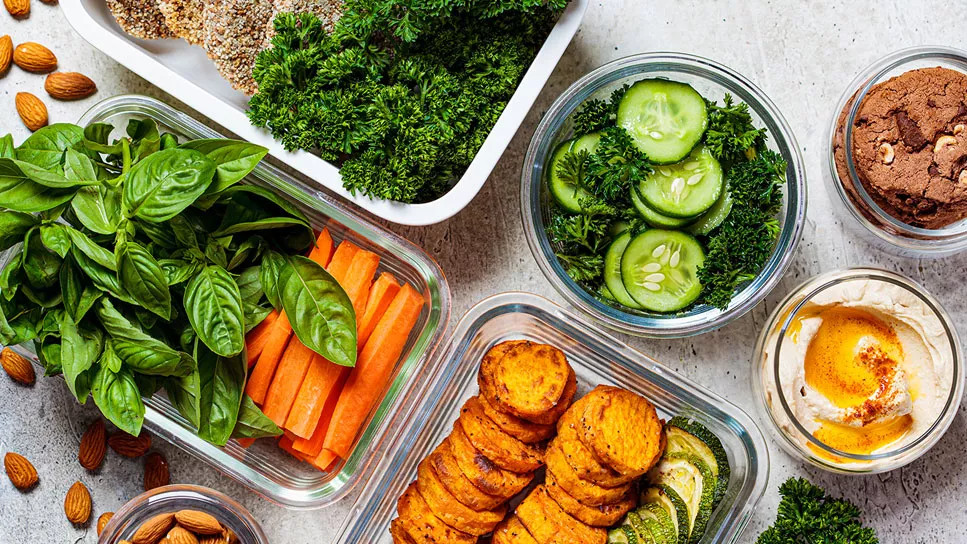
Beginner’s Meal Prep: Easy Steps for a Healthier Week

Meal prepping has become one of the most valuable habits for anyone trying to save time, stay organized, and make healthier eating choices. While the trend has exploded across social media, many people still feel intimidated by the idea. If you’ve ever wondered how to start a meal prep routine or how to food prep for the week without feeling overwhelmed, this Beginner’s Meal Prep Guide will walk you through every step.
Whether you’re searching for beginners meal prep, meal prep basics, or simple meal prep recipes, this in-depth guide will help you understand what meal prepping is, why it matters, and how to build a system that fits your lifestyle.
What Is Meal Prepping?
Meal prepping is the process of preparing meals or ingredients in advance so you can enjoy ready-to-eat or easy-to-cook dishes throughout the week. If you’ve ever packed leftovers for lunch the next day, you’ve already begun your journey into beginner meal prep.
Typically, people meal prep 3–7 days’ worth of food at once. That might include:
- Fully cooked meals
- Pre-portioned breakfasts
- Chopped vegetables
- Ready-to-blend ingredients
- Snacks organized by portions
If you’re wondering “how do you meal prep for the week?”, think of it as doing all the cooking work at once and enjoying the convenience later.
Why Meal Prep?
Meal prepping provides benefits far beyond saving time in the kitchen. For beginners, meal prep helps:
Save Money
Cooking in bulk dramatically reduces unnecessary grocery trips and take-out spending. When you learn how to food prep for the week, you automatically plan smarter and waste less.
Save Time
Instead of cooking daily, you batch your effort. One session = several meals ready to go.
Reduce Stress
No more wondering, “What should I cook tonight?”
Your meals are already portioned and ready.
Eat Healthier
When food is ready to eat, you’re less likely to reach for processed snacks or fast food.
Reduce Food Waste
Meal prepping helps you use ingredients fully before they spoil.
If you want convenience and efficiency, this beginner meal prep guide is your best starting point.
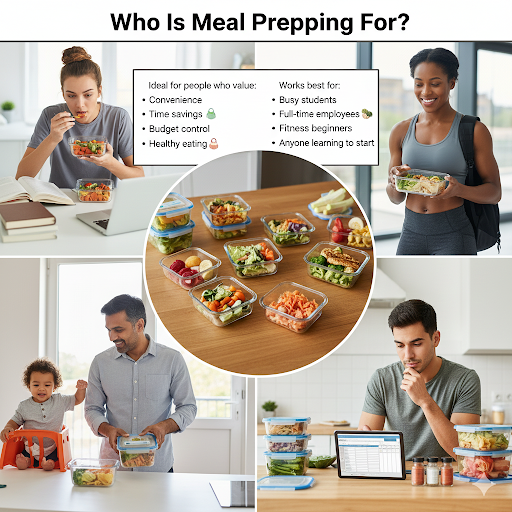
Who Is Meal Prepping For?
Meal prepping is ideal for people who value:
- Convenience
- Time savings
- Structure
- Budget control
- Healthy eating
If you enjoy routine and don’t mind eating the same meal several times a week, you’ll thrive with meal prepping. But if you dislike leftovers or crave daily variety, you may prefer prepping only breakfasts or lunches.
Meal prepping works best for:
- Busy students
- Full-time employees
- Fitness beginners
- Parents who want grab-and-go meals
- Anyone learning how to start meal prepping
What Can I Meal Prep?
Here’s the big question every beginner asks:
“What foods can I actually prep in advance?”
Some foods hold up extremely well for several days. Others don’t taste great once stored.
Foods That Work Best for Beginners Meal Prep:
Cooked grains (rice, quinoa, couscous, pasta)
Cooked beans or lentils
Cooked chicken, beef, pork, tofu, or turkey
Roasted vegetables
Hearty raw vegetables (carrots, celery, cabbage, kale, peppers)
Hard-boiled eggs
Cheeses
Nuts + seeds
Sauces like hummus, salsa, salad dressings, yogurt dips
Foods That Don’t Keep Well:
Lettuce (wilts quickly)
Berries (soften and lose shape)
Fried foods (lose crispiness)
Chips, crackers, brittle foods
Cut fruit (browns fast)
But don’t worry — you can still meal prep salads and fruits if you pack ingredients separately. For example:
Keep lettuce in one container
Store dressing in a small cup
Add toppings right before eating
This method is great if you’re searching for how to meal prep salads or how to meal prep smoothies without losing freshness.
How Long Does Meal Prep Stay Fresh?
Many beginners ask:
“How long can I keep meal prep in the fridge?”
While longevity depends on ingredients, storage quality, and your fridge temperature, a good rule of thumb is:
3–4 days for most cooked meals
Up to 5 days for heartier ingredients
Up to 3 months in the freezer.
For safety, always follow FDA refrigeration guidelines.
Many people prep meals for:
Four days at a time (most popular)
Prep once again midweek
Or use freezer meals for the remaining days.
The key point: prep what you’ll realistically eat — no need to overdo it.
How to Start Meal Prepping
If you’re brand new and researching how to start a meal prep routine, the most important rule is:
Start small. Very small.
Don’t cook an entire week’s worth of meals on day one. Instead:
Step 1: Prep one meal
Start by packing leftovers from dinner as lunch for tomorrow.
This helps you learn:
How foods taste after storage
Texture changes
What reheats well
What you enjoy eating later
Step 2: Prep one recipe for the week
Choose a simple dish that combines:
Protein
Veggies
Carbs
Examples:
Burrito bowls
Veggie stir fry
Chicken, rice & greens
Pasta with vegetables
Lentil soup
This helps you practice meal prep basics without juggling multiple recipes.
Step 3: Expand slowly
Once comfortable, try:
Two meals (e.g., breakfast + lunch)
Adding snacks
Prepping smoothies
Prepping salads
Trying simple meal prep recipes with 3–5 ingredients
Gradually build a system that works for your appetite and schedule.
My Meal Prep Formulas for Beginners
A formula makes meal prep decisions easier. Here are three to try:
1. Basic Meal Prep Formula
Protein + Grain + Vegetable
Great for people wanting balanced meals.
2. Low-Carb Formula
Protein + Vegetable + Vegetable
Ideal for those minimizing carbs.
3. Vegetarian Formula
Legume + Grain + Vegetable
Budget-friendly and high in fiber.
You can customize any formula with:
Salsa
Dressings
Cheese
Nuts
Seeds
Fresh herbs
This keeps meals interesting without adding extra cooking.
Containers You Need for Meal Prepping
You don’t need fancy tools. Begin with what you have.
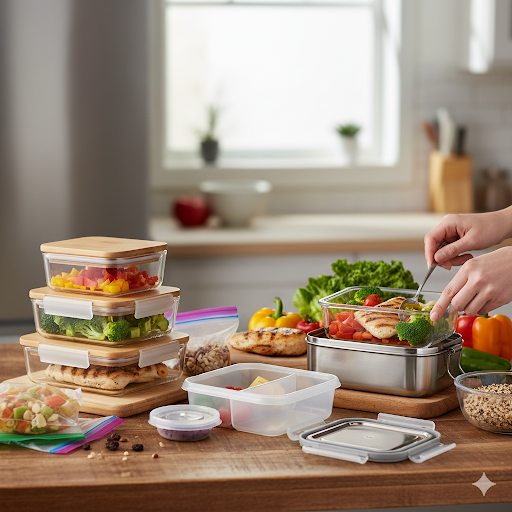
Best containers for beginner meal prep:
BPA-free plastic containers
Glass containers (3-cup and 4-cup sizes)
Divided containers for separating food
Stainless steel bento boxes for cold meals
Small dip cups for sauces
Resealable bags for snacks or ingredients
When researching how to food prep, storage is as important as the recipe.
How to Meal Prep for the Week (Step-by-Step)
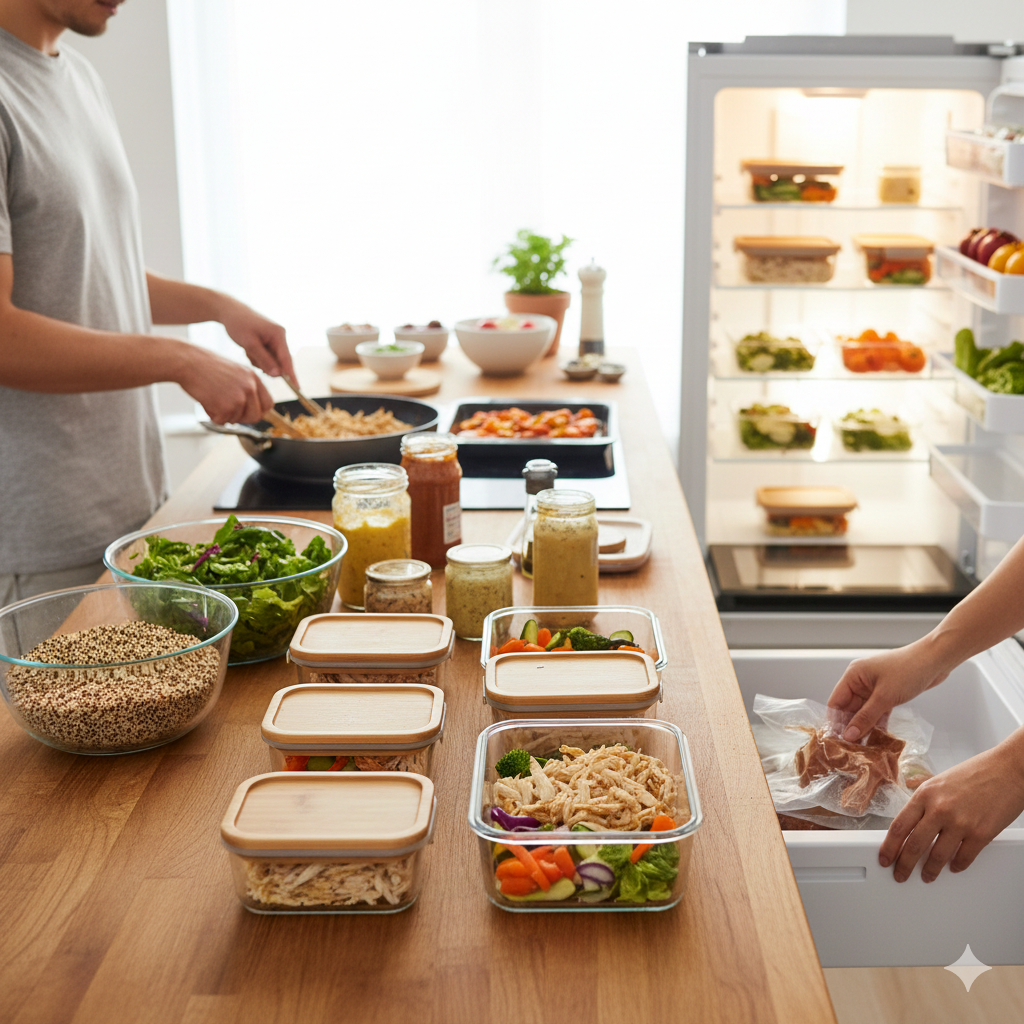
Here’s a simple workflow:
1. Choose 1–2 recipes
Use your meal prep formulas.
2. Write a grocery list
Stick to essentials to avoid overspending.
3. Cook ingredients in batches
Roast trays of veggies
Cook rice or pasta
Prep protein
Make sauces
4. Portion meals
Divide evenly across containers.
5. Store properly
Fridge = 3–4 days
Freezer = long-term backup meals
If you’ve ever asked “how do you meal prep chicken?” — cook a big batch, shred it, and use it for bowls, salads, wraps, or soups.
Beginner-Friendly Meal Prep Ideas
Here are easy options for people wanting easy meal prep ideas:
Breakfasts
Overnight oats
Make-ahead smoothies
Egg muffins
Yogurt & granola cups
Breakfast burritos (freeze-friendly)
Looking for how to meal prep breakfast burritos?
Wrap cooked eggs, veggies, and cheese in tortillas and freeze them — they reheat perfectly.
Lunch & Dinner
Chicken & rice bowls
Lentil curry
Pasta with roasted vegetables
Turkey meatballs
Tofu stir fry
Chili or stews
Snacks
Veggie sticks
Hummus cups
Nuts + dried fruit
Hard-boiled eggs
Final Tips for Beginners Meal Prep Success
Test ingredients to learn your personal preferences
Keep seasonings simple at first
Prep only what you can realistically finish
Rotate recipes to avoid food boredom
Prioritize foods that store well
Build habits slowly
Meal prepping doesn’t need to be complicated. This guide to meal prep is designed to help you take the first step toward consistent, stress-free, and healthy eating.