

Best Soil for Indoor Plants: Choosing the Right Potting Mix for Healthy Houseplants

Choosing the Best Soil for Indoor Plants
Caring for houseplants goes far beyond watering and sunlight. One of the most crucial—yet often overlooked—factors in your plant’s health is choosing the best soil for indoor plants. Each species has its own needs: some love consistently moist soil, others thrive in fast-draining, gritty mixes, while certain varieties require a highly aerated, bark-based environment.
Since every plant is different, it can be confusing to decide what soil is best for houseplants. There’s no single indoor plant potting mix that works for everything. But don’t worry—this guide breaks things down simply so you can choose the best potting soil mix for indoor plants based on how they naturally grow.
Match Soil Ingredients to the Plant’s Natural Habitat
Houseplants originate from habitats all around the world—humid rainforests, mossy cloud forests, dry deserts, tropical canopies, savannas, and more. Understanding where your plant grows in the wild helps you choose the soil mix for houseplants that mimics their natural conditions.
To thrive indoors, a plant needs four essential soil components:
Water retention: soil must hold some moisture without staying soggy
Nutrient availability: soil should contain or support access to nutrients
Aeration: roots must breathe
Anchoring: the soil must support the plant structure
Whether you’re growing tropical foliage, succulents, orchids, or flowering classics, choosing the best soil for indoor plants starts with understanding what their roots experience in nature.
Why You Should Avoid Using Outdoor Soil Indoors
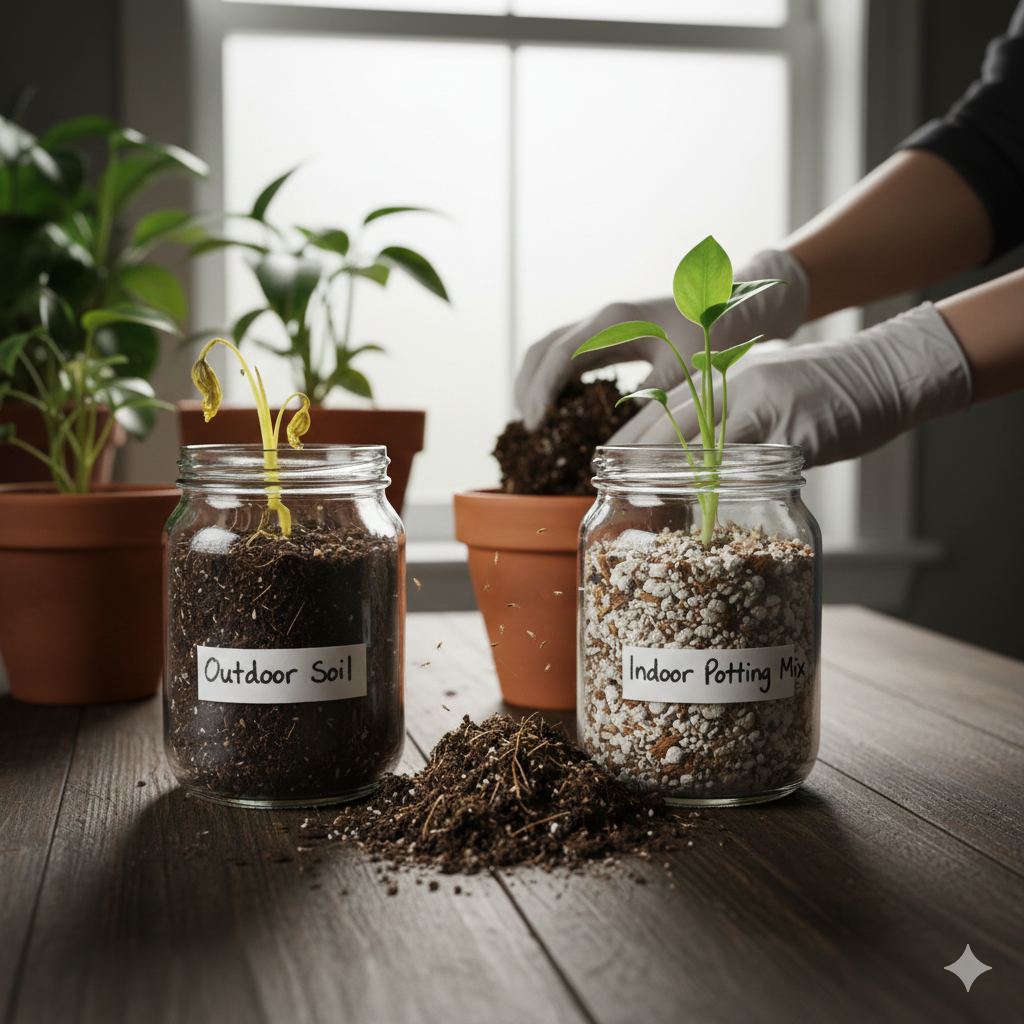
Many beginners wonder, “Can I use outdoor soil for indoor plants?”
or
“Can I use outdoor potting mix for indoor plants?”
The short answer: No.
Outdoor soil—even high-quality garden soil—is:
- Too dense and heavy
- Slow to drain
- Full of pathogens, pests, and weeds
- Seeds prone to compacting in pots
Indoor plants need light, airy houseplant soil that supports drainage and oxygen flow. Heavy soil leads to:
- Root Rot
- Fungus Gnats
- Suffocation of
- Stunted Growth
If you want healthy, long-lived plants, skip the houseplant dirt from your yard and choose a proper indoor potting mix.
All-Purpose Potting Mix: A Good Starting Point
If you’re unsure what soil is best for indoor plants, a high-quality all-purpose indoor plant potting mix is a great place to start.
A good mix should be:
- Light and fluffy
- Able to hold moisture without becoming soggy
- Full of organic matter
- Well draining
- Close to neutral pH
All-purpose soil works well for many common houseplants, like pothos, philodendrons, peace lilies, ferns, dracaenas, and more. These mixes typically include ingredients such as:
- Peat moss or Coco coir
- Perlite
- Bark
- Compost
This gives indoor plants a balanced environment that supports root growth and hydration without overwhelming them with water.
Epiphyte Mix: For Orchids, Air Plants, and Other Tree-Growing Species
Some indoor plants don’t naturally grow in soil at all — they grow on trees. These are called epiphytes and include:
- orchids
- staghorn ferns
- air plants
- some hoyas
- ant ferns
These plants absorb nutrients and moisture from the air, rainwater, and surrounding debris in their natural environments. They need a chunky, breathable indoor gardening soil type that offers:
- excellent aeration
- low fertility
- minimal moisture retention
- acidity (especially for orchids)
Common components of epiphyte mixes include:
- orchid bark
- charcoal
- perlite
- sphagnum moss
These provide structure and airflow while preventing roots from suffocating.
Cactus and Succulent Mix: Perfect for Dry-Loving Plants
Succulents, cacti, aloe, haworthia, jade plants, and sansevieria prefer dry, fast-draining soil. They evolved in harsh, desert-like regions, so they need the best soil for houseplants that don’t like staying wet.
A good cactus and succulent mix should:
- drain quickly
- contain sand or grit
- have very low moisture retention
- include coarse materials like pumice or perlite
Often be slightly alkaline
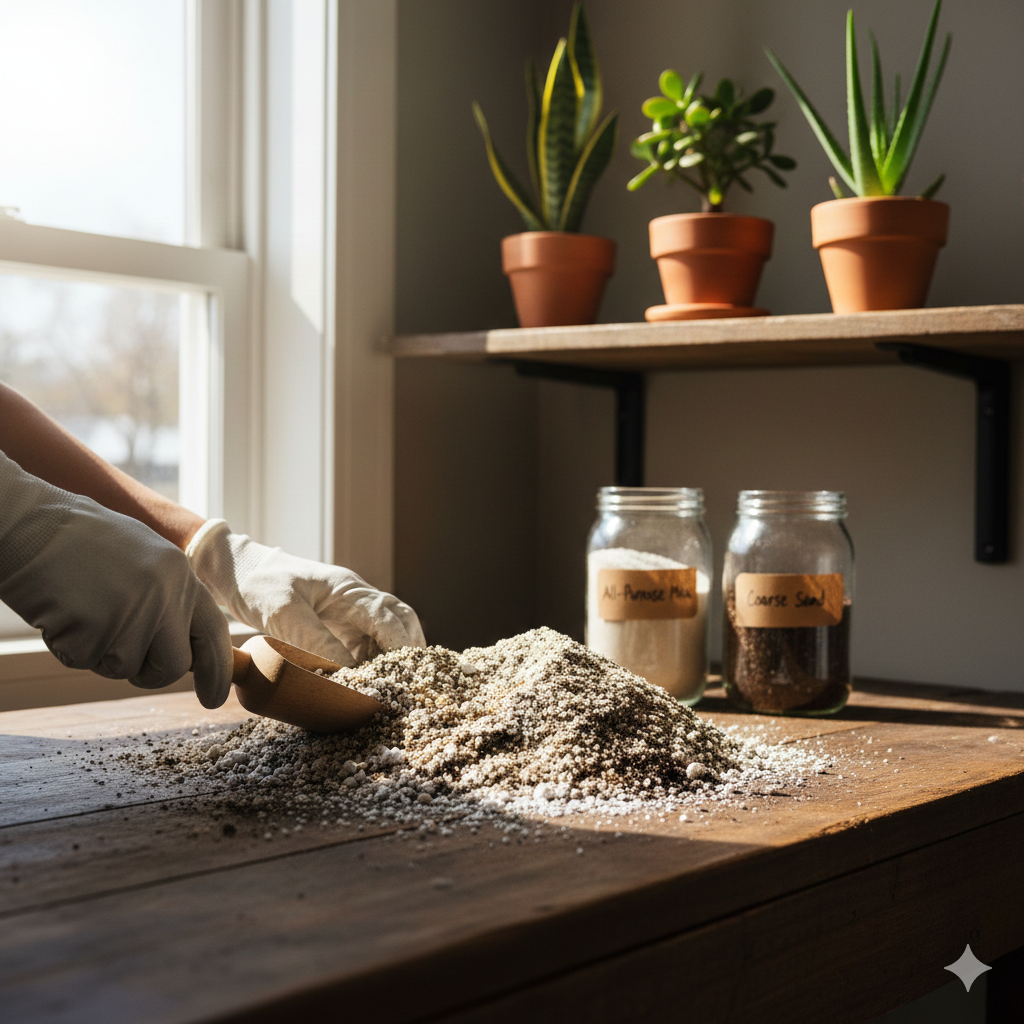
To create your own mix, blend:
- 2 parts all-purpose potting mix
- 1 part coarse sand
- 1 part perlite or pumice
This creates a gritty, breathable environment that prevents root rot for plants that need to dry out between waterings.
Specialized Soil Mixes for Houseplants
Local garden centers sell many specific soil types, such as:
- African violet mix
- Bromeliad mix
- Bonsai mix
- Azalea mix
- Begonia mix
- Succulent bonsai blends
- Citrus blents
- Fern soil
These products can be helpful if you’re growing a plant that needs very particular conditions. However, it’s usually simple to adjust a basic mix with amendments instead of buying many specialized bags.
Common Ingredients Found in Indoor Soil Mixes
Understanding common soil components can help you choose the best soil for indoor plants or create your own:
Coco Coir
Lightweight, renewable, holds moisture well without compacting.
Perlite
White volcanic glass that improves aeration and drainage.
Pumice
Heavier than perlite, long-lasting, and excellent for drainage.
Bark Chips
Used in orchid mixes, also adds structure and air spaces.
Peat Moss
Moisture-retentive but acidic; great for tropical plants, but not eco-friendly.
Vermiculite
Increases moisture retention; good for seedlings and moisture-loving plants.
Compost
Adds nutrients but must be used sparingly in indoor plants.
Sand
Used to add grit and improve drainage in succulent mixes.
How to Choose the Best Soil for Indoor Plants
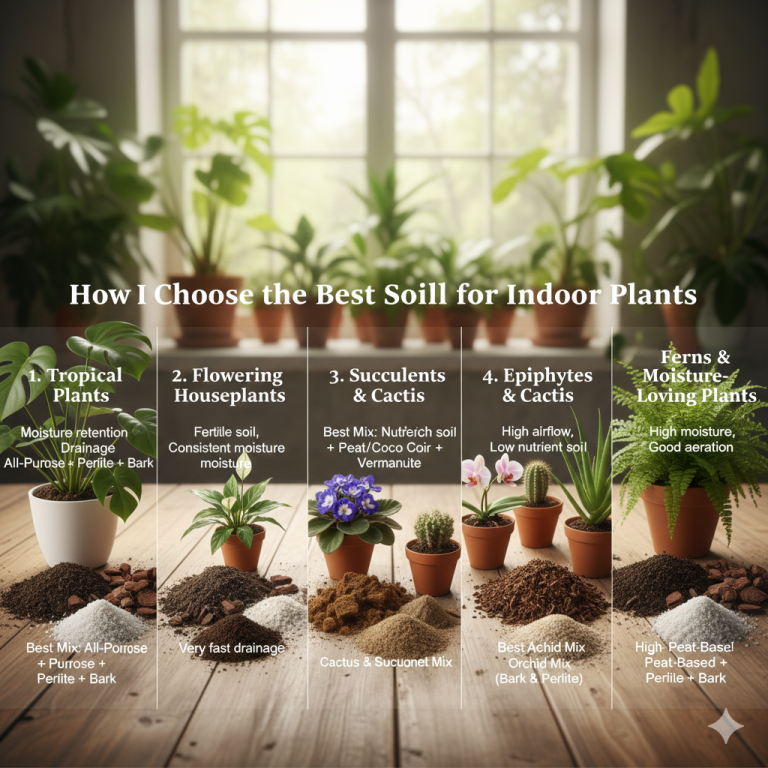
When deciding what kind of soil for indoor plants you need, consider these plant categories:
1. Tropical Plants
(e.g., Monstera, pothos, philodendron)
Need:
- moisture retention and drainage
- chunky, airy structure
Best Mix:
- all-purpose potting soil
- perlite
- bark pieces
2. Flowering Houseplants
(e.g., African violets, peace lilies)
Need:
- fertile soil
- consistent moisture
Best Mix:
- nutrient-rich all-purpose mix
- peat or coco coir
- vermiculite
3. Succulents & Cacti
(e.g., aloe, jade, echeveria, cacti)
Need:
- very fast drainage
- low moisture retention
Best Mix:
- cactus & succulent mix
4. Epiphytes
(e.g., orchids, staghorn ferns, hoyas)
Need:
- high airflow
- low-nutrient soil
Best Mix:
- orchid mix with bark & perlite
5. Ferns & Moisture-Loving Plants
(e.g., Boston fern, maidenhair fern)
Need:
- High moisture but not soggy
- Good aeration
Best Mix:
- Peat-based soil
- Perlite
- Bark
Signs You’re Using the Wrong Soil
If your soil is not right, indoor plants will show symptoms such as
- Yellowing leaves
- Root rot
- Constantly soggy soil
- Crispy leaves (from under watering due to poor absorption)
- Stunted growth
- Fungus gnats
- Hardened or compacted soil surface
If you see these issues, repot using a better indoor plant potting mix tailored to the species.
How to Improve Any Indoor Soil Mix
To make the best soil for indoor plants at home, adjust your mix using:
For better drainage:
- Add perlite
- Add pumice
- Add coarse sand
- Add bark
For more moisture retention:
- Add peat moss
- Add Coco Coir
- Add vermiculite
For better aeration:
- Add bark
- Add perlite
For more nutrients:
- Add compost (sparingly)
- Add worm castings
Small adjustments can dramatically improve your plant’s growth.
Final Thoughts: Choosing What Soil Is Best for Indoor Plants
Your plants’ success starts with their soil. Whether you’re planting succulents, foliage plants, flowers, or orchids, choosing the best soil for houseplants ensures:
stronger roots
healthier growth
fewer pests
better nutrient absorption
longer plant life.
Use this guide to understand different indoor gardening soil types, experiment with mixes, and help every plant in your home thrive.