

Climate Change Causes, Solutions, Effects, and How to Take Action.

Climate change is one of the most urgent challenges facing our planet today. From rising global temperatures to extreme weather events, the impacts of climate change are becoming increasingly evident across ecosystems, economies, and human health. While natural processes have historically influenced Earth’s climate, human activity now plays the dominant role in driving rapid and potentially catastrophic changes. Understanding climate change causes, its effects, and actionable climate change solutions is essential for safeguarding our environment and future generations.
What Is Climate Change?
Climate change refers to long-term shifts in Earth’s climate patterns, including changes in temperature, rainfall, wind, and seasonal cycles. While global warming specifically describes the rise in average surface temperatures due to greenhouse gas emissions, climate change encompasses a broader range of environmental changes.
Today, climate change manifests in the form of melting glaciers, stronger storms, more frequent droughts, and shifting ecosystems. These changes threaten biodiversity, food security, water availability, and public health worldwide.
Causes of Climate Change
Understanding the causes of climate change is key to developing effective solutions. Several human and natural factors contribute to global climate shifts:
Greenhouse Gas Emissions
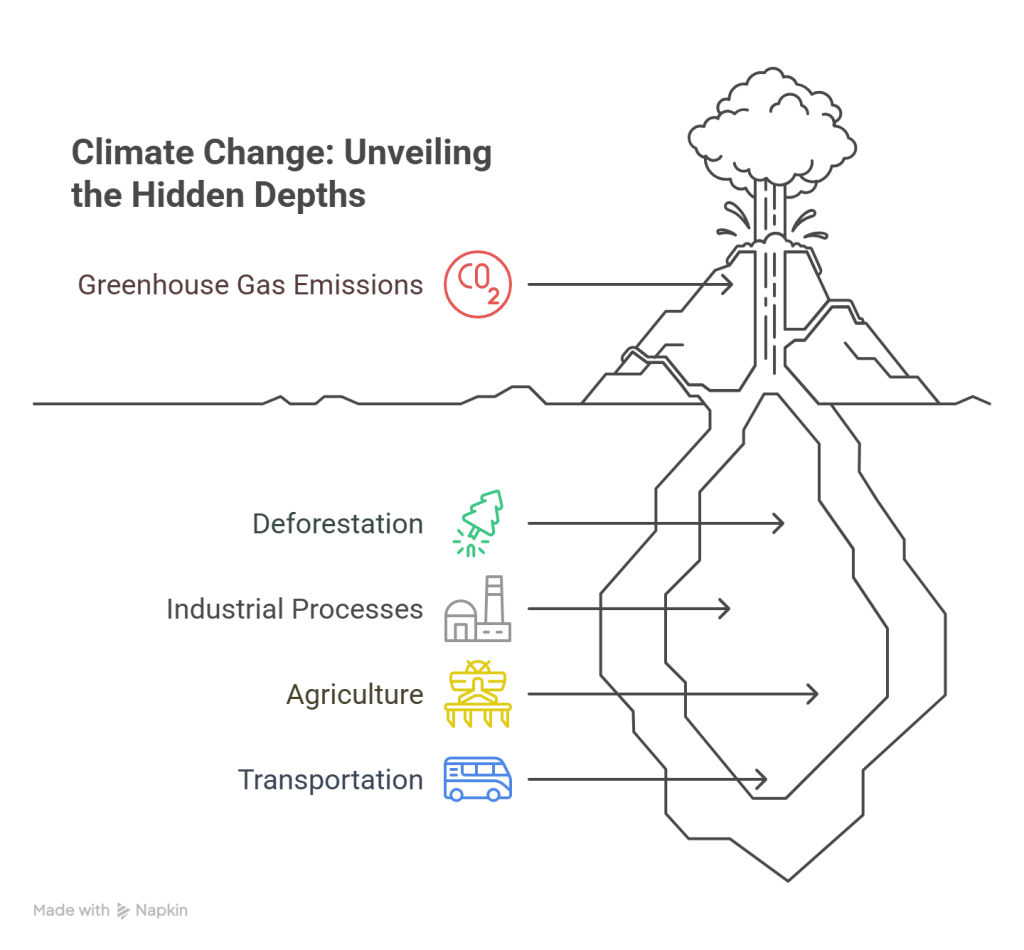
Greenhouse gases (GHGs) trap heat in the atmosphere, leading to rising temperatures and altering global climate patterns. While some GHGs occur naturally, human activity has sharply increased their concentration. Key contributors include:
- Carbon dioxide (CO2): Released from burning fossil fuels, deforestation, and industrial processes, CO2 is the most significant driver of global warming.
- Methane (CH4): Emitted from livestock, landfills, and fossil fuel extraction.
- Nitrous oxide (N2O): Produced by agriculture and fertilizer use.
- Chlorofluorocarbons (CFCs): Man-made chemicals from refrigeration and aerosols.
How Deforestation Impacts Climate Change
Deforestation is a critical factor in climate change. Forests act as natural carbon sinks, absorbing CO2 from the atmosphere. When trees are removed, this carbon storage capacity is lost, and the carbon stored in trees is released, intensifying global warming. The Amazon rainforest alone absorbs nearly 2.2 billion tons of CO2 annually. Large-scale deforestation reduces this ability, accelerating climate change and contributing to biodiversity loss.
Agriculture and Livestock
Agricultural practices, including livestock production, contribute significantly to climate change. Livestock emits methane, a potent greenhouse gas, while crop production and fertilizer use release nitrous oxide. Unsustainable farming methods also lead to deforestation, further worsening the problem. Adopting sustainable agricultural practices can significantly reduce emissions while increasing productivity.
Industrial Activities and Human Behavior
Agricultural practices, including livestock production, contribute significantly to climate change. Livestock emits methane, a potent greenhouse gas, while crop production and fertilizer use release nitrous oxide. Unsustainable farming methods also lead to deforestation, further worsening the problem. Adopting sustainable agricultural practices can significantly reduce emissions while increasing productivity.
Effects of Climate Change
The effects of climate change are already visible across the globe, affecting natural systems, human societies, and economic stability. Some of the most significant impacts include:
Extreme Weather Events
Climate change has increased the frequency and intensity of extreme weather events, including hurricanes, heatwaves, floods, droughts, and wildfires. These events not only endanger lives but also have devastating economic consequences. For example, the 2023 hurricane season caused billions of dollars in damage across the United States and the Caribbean.
Rising Sea Levels
Melting glaciers and ice sheets have caused sea levels to rise, threatening coastal cities, small islands, and coastal ecosystems. Rising sea levels increase the risk of flooding, erosion, and saltwater intrusion into freshwater sources. The National Oceanic and Atmospheric Administration predicts sea levels could rise by 8 to 12 inches by 2100 if current trends continue.
Disruption of Ecosystems
Climate change disrupts natural ecosystems, affecting the survival of plant and animal species. Altered weather patterns, temperature fluctuations, and habitat destruction contribute to species extinction. Studies suggest that nearly 30% of plant and animal species could be at risk if global temperatures continue to rise unchecked.
Human Health Risks
Climate change has profound implications for human health. Heatwaves, air pollution, and the spread of diseases pose direct threats, while extreme weather events disrupt food and water supply chains. Vulnerable populations, including children, the elderly, and low-income communities, are disproportionately affected.
Economic and Social Impacts
Climate change creates substantial economic challenges. Increased frequency of natural disasters, crop failures, and infrastructure damage leads to billions in economic losses each year. The U.S. alone is estimated to spend over $240 billion annually due to climate-related disasters, with future costs projected to rise significantly.
Climate Change Causes and Solutions
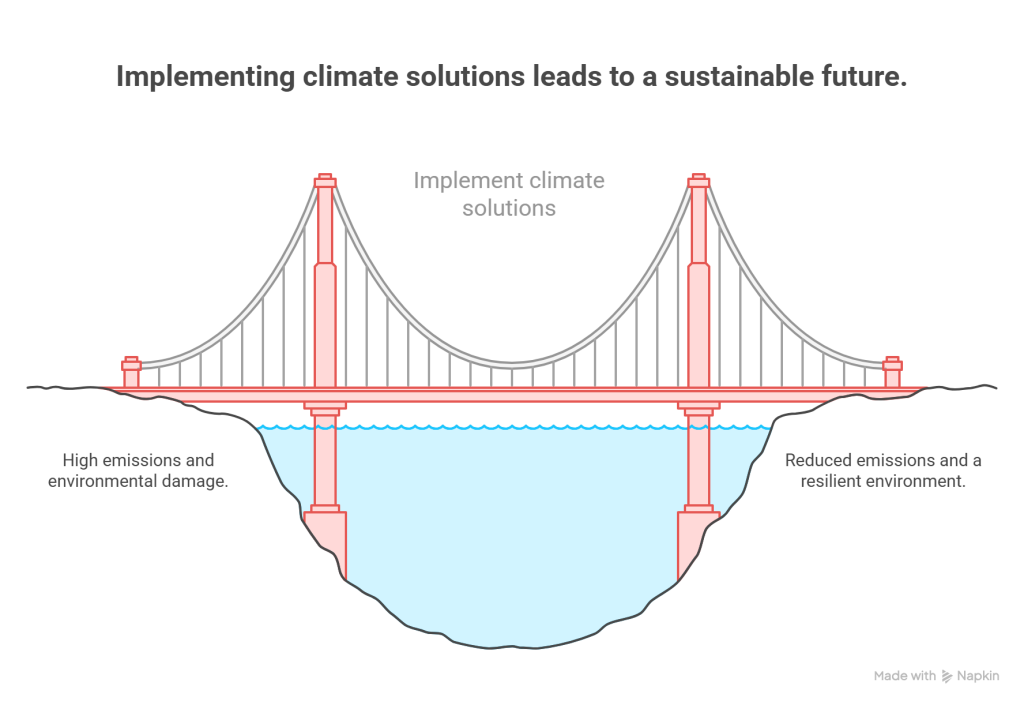
While the challenges posed by climate change are significant, there are practical climate change solutions that can mitigate its effects and help build a sustainable future.
Transition to Renewable Energy
Shifting from fossil fuels to clean energy sources such as solar, wind, and hydroelectric power can drastically reduce greenhouse gas emissions. Widespread adoption of renewable energy not only combats climate change but also creates new jobs and economic opportunities.
Forest Conservation and Reforestation
Protecting existing forests and planting new trees helps absorb CO2, restores ecosystems, and reduces the harmful effects of deforestation. Reforestation programs also enhance biodiversity and stabilize local climates.
Sustainable Agriculture
Implementing sustainable farming practices, such as crop rotation, reduced fertilizer use, and regenerative grazing, can decrease agricultural emissions while increasing soil health and productivity. Livestock management and methane capture techniques further reduce greenhouse gas emissions.
Energy Efficiency
Using energy-efficient appliances, insulating buildings, and adopting green construction practices can significantly reduce energy consumption. Lower energy demand directly translates into fewer emissions and reduced strain on natural resources.
Clean Transportation
Transportation is a major source of carbon emissions. Switching to electric vehicles, expanding public transportation, and encouraging biking and walking are key strategies to reduce the carbon footprint.
Waste Reduction
Minimizing food waste, recycling, and reducing single-use plastics can reduce greenhouse gas emissions from landfills and conserve natural resources. Circular economy practices help create a sustainable consumption model that benefits both people and the planet.
Why Climate Change Solutions Matter
Addressing climate change is critical not just for the environment, but for society as a whole. Effective solutions can:
- Boost the Economy: Green industries and clean energy sectors create jobs and stimulate innovation.
- Improve Public Health: Reducing pollution improves air and water quality and decreases health risks.
- Enhance Global Security: Mitigating climate risks prevents resource conflicts, migration pressures, and social instability.
- Protect Future Generations: Immediate action ensures a habitable planet for children and grandchildren.
Conclusion
Climate change is a complex issue driven by greenhouse gas emissions, deforestation, agriculture, and industrial activities. Its effects are visible across ecosystems, human societies, and economies. While the challenges are significant, there are numerous climate change solutions that individuals, organizations, and governments can implement. From renewable energy and sustainable agriculture to forest conservation and clean transportation, each action contributes to a healthier and more sustainable planet. Understanding the causes and effects of climate change and adopting proactive measures can help secure a better future for all. After all, it’s our ethical responsibility to give a better world to the upcoming generation.
Frequently Asked Questions (FAQs)
Q1: What are the main causes of climate change?
A1: Climate change is primarily caused by human activities such as burning fossil fuels, deforestation, industrial emissions, and unsustainable agricultural practices. Greenhouse gases like carbon dioxide, methane, and nitrous oxide trap heat in the atmosphere, leading to global warming and altered climate patterns.
Q2: How does deforestation impact climate change?
A2: Deforestation reduces the number of trees that absorb carbon dioxide from the atmosphere. When forests are cleared, stored carbon is released, increasing greenhouse gas concentrations and accelerating global warming. Deforestation also disrupts ecosystems and biodiversity.
Q3: What are the effects of climate change?
A3: Climate change leads to extreme weather events, rising sea levels, shrinking ice sheets, ecosystem disruption, health risks, and economic challenges. These effects impact food and water security, biodiversity, and human livelihoods.
Q4: What are some solutions to climate change?
A4: Effective climate change solutions include transitioning to renewable energy, conserving forests, adopting sustainable agriculture, using energy-efficient technologies, promoting clean transportation, reducing waste, and offsetting carbon emissions.
Q5: Can climate change be reversed?
A5: While climate change cannot be completely reversed, its impacts can be mitigated through collective action. Reducing greenhouse gas emissions, restoring ecosystems, and adopting sustainable practices can slow the rate of climate change and prevent the worst consequences.
Q6: How does agriculture contribute to climate change?
A6: Agriculture contributes through methane emissions from livestock, nitrous oxide from fertilizers, and deforestation for farmland. Sustainable farming practices and carbon sequestration can help reduce the sector’s impact on climate change.
Q7: Why is climate change a global concern?
A7: Climate change affects every part of the world, causing extreme weather, sea-level rise, biodiversity loss, and economic challenges. It impacts health, security, and resources globally, making it a shared responsibility to address.
Q8: How can individuals help combat climate change?
A8: Individuals can help by reducing energy consumption, using renewable energy, planting trees, adopting a plant-based diet, minimizing waste, using public transportation, and supporting eco-friendly initiatives.
Q9: What role do governments play in climate change solutions?
A9: Governments can implement policies to reduce emissions, promote renewable energy, regulate industrial pollution, support sustainable agriculture, and fund climate research. International cooperation is also vital for addressing global climate challenges.
Q10: How urgent is the need for climate change solutions?
A10: Immediate action is critical. Delaying solutions increases the severity of climate impacts, including more extreme weather, higher economic costs, and greater threats to human health and biodiversity. Early action can prevent irreversible damage and protect future generations.